
Introduction
A handheld milk frother is one of the simplest ways to improve coffee and milk-based drinks at home. It is small, fast to store, and usually much cheaper than a countertop frother, which is why it appeals to budget buyers, casual coffee drinkers, and anyone who wants a light tool instead of a full machine.
This guide explains how a handheld milk frother works, who it is best for, where it performs well, where it falls short, and how to choose the right one. It also covers non-dairy milk use, rechargeable versus battery models, cleaning, troubleshooting, and the main comparisons that matter before buying.
What Is a Handheld Milk Frother?
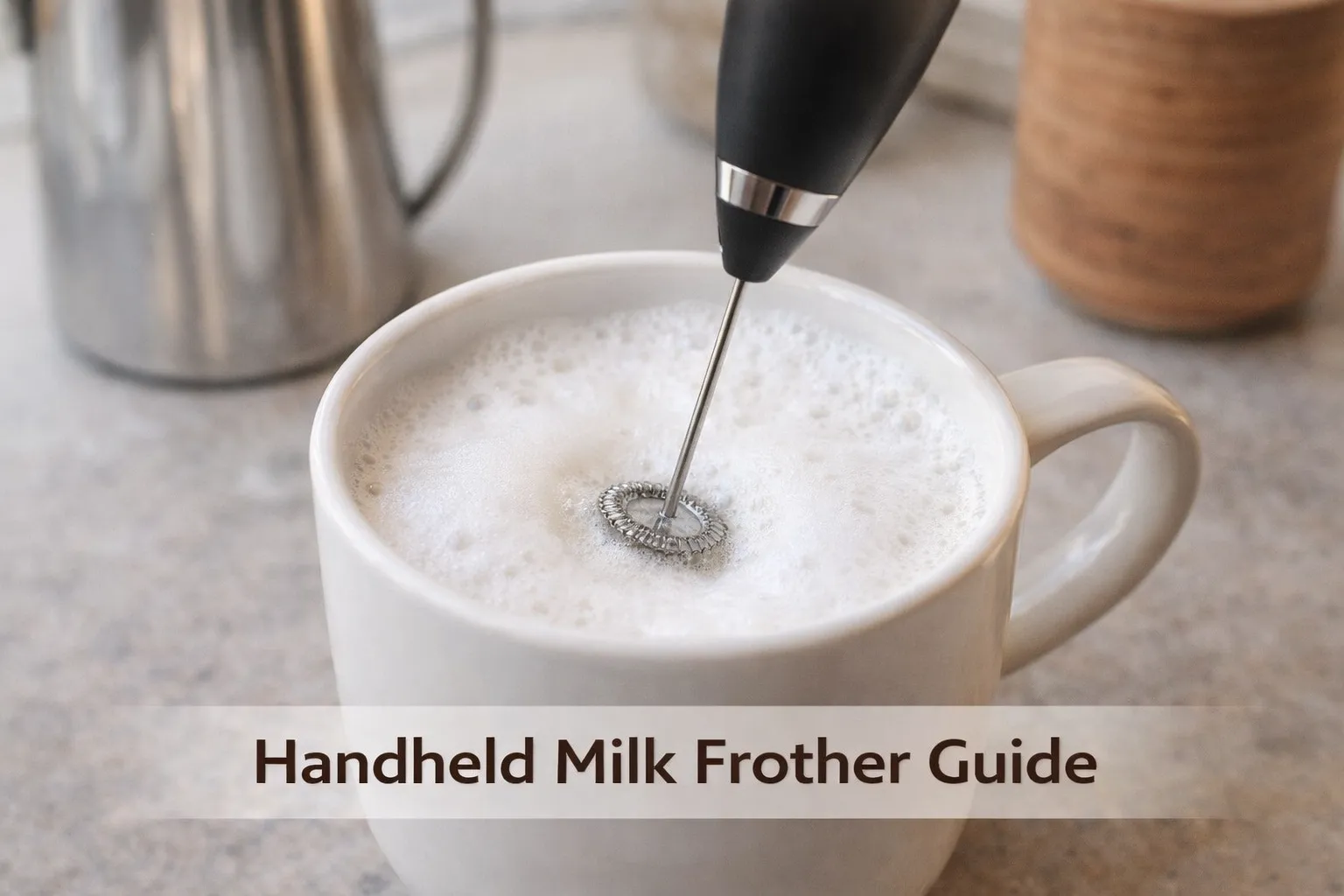
A handheld milk frother is a compact whisk-style device that spins a small metal coil at high speed to mix air into milk. The result is light foam for drinks such as coffee, latte-style beverages, cappuccino-style drinks, matcha, and hot chocolate.
Unlike an automatic frother, a handheld model does not usually heat the milk on its own. It focuses on mixing and aeration. That makes it cheaper, easier to store, and more portable, but it also means the final texture depends more on the user, the milk type, and the angle of use.
How Does a Handheld Milk Frother Work?
A handheld milk frother works by rotating a small spring whisk quickly enough to introduce air into the milk. When the whisk moves just below the surface, it creates bubbles and builds a foam layer. When it moves deeper into the milk, it blends liquid and foam more evenly.
Because the device is small and direct, it reacts quickly to changes in angle, depth, and speed. That is why technique matters more with a handheld frother than with an automatic countertop model. A good result depends on using the right container, not overfilling the milk, and stopping once the texture matches the drink you want to make.
Who Should Buy a Handheld Milk Frother?
A handheld milk frother is best for people who want a low-cost and portable way to improve drinks at home. It suits users who make one or two drinks at a time, buyers with limited kitchen space, and people who do not want a larger machine on the counter.
It is also a strong fit for matcha drinkers, occasional oat milk users, and buyers who want one tool for coffee foam, mixing powders, and quick beverage preparation. It is less ideal for users who want heated milk, highly repeatable foam texture every day, or larger milk volumes with minimal effort.
What Is the Best Handheld Milk Frother for Most Users?
For most users, the best handheld milk frother is a rechargeable model with a durable whisk shaft, comfortable grip, stable power output, and enough speed to handle both dairy and non-dairy milk. Rechargeable options usually feel more convenient over time because they remove the need to replace disposable batteries.
That said, the best choice still depends on routine. A battery-powered model can be perfectly fine for light or occasional use. If you travel often, mix matcha regularly, or want the lowest entry price, a simple battery frother may still be enough. If you want stronger long-term convenience and more consistent power, rechargeable is usually the better direction.
Pros and Cons of a Handheld Milk Frother
A handheld milk frother is attractive because it is simple, affordable, and versatile, but it also has limits compared with larger frother types.
| Aspect | Advantage | Limitation |
| Portability | Very easy to store, carry, and use in small kitchens | Less suited to larger milk volumes |
| Price | Usually the lowest-cost frother type | Build quality can vary widely at the low end |
| Ease of storage | Fits in drawers or travel setups | Can feel less substantial than countertop models |
| Foam consistency | Fast and flexible for simple drinks | Results depend more on technique |
| Milk volume | Good for one cup at a time | Not ideal for multiple large drinks in one go |
| Durability | Simple construction can be reliable | Cheap shafts, switches, or battery systems may wear faster |
What Is a Handheld Milk Frother Best For?
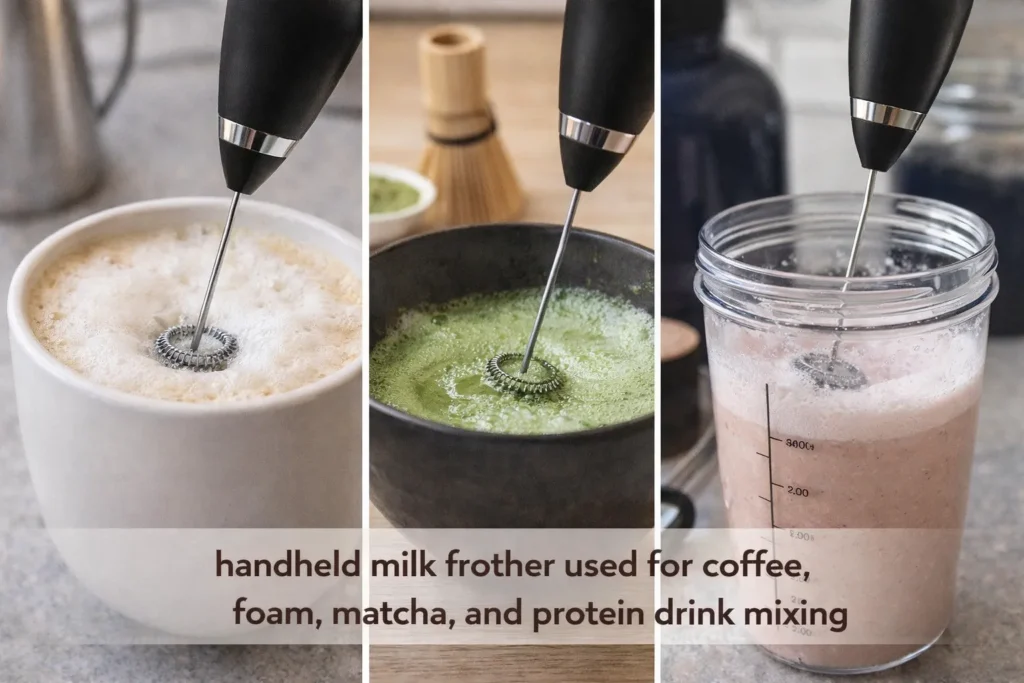
A handheld milk frother is best for quick home drinks where convenience matters more than fully automatic consistency. It works well for simple coffee foam, small latte-style drinks, matcha, hot chocolate, and the mixing of powders such as protein drinks or instant beverage blends.
It is especially useful when speed and portability are the main priorities. A handheld frother can live in a drawer, travel bag, or office setup and be ready in seconds. It is less suited to users who want thick foam for multiple cappuccinos every morning or who expect the machine to heat and texture milk with almost no user input.
Can a Handheld Milk Frother Froth Oat Milk and Other Non-Dairy Milk?
Yes, a handheld milk frother can froth oat milk and other non-dairy milk, but the quality depends heavily on the milk formula and the user’s technique. Oat milk is usually the easiest plant-based option because it tends to create a smoother and more stable foam than almond milk.
Almond milk can froth, but the results are often thinner and less stable. Soy milk can work well, especially in barista-style versions. With handheld frothers, non-dairy results improve when you use a narrower container, avoid overfilling, and stop frothing before the bubbles become too large and airy.
Rechargeable vs Battery Handheld Milk Frother
This is one of the most practical buying decisions on the page because power style affects cost, convenience, and long-term usability.
| Type | Power Consistency | Convenience | Ongoing Cost | Best For |
| Rechargeable | Usually more stable over time | Easy to top up without buying batteries | Lower long-term cost | Regular home use |
| Battery | Can be fine at first, but output may weaken as batteries drain | Simple to start with, but needs replacement batteries | Higher long-term battery cost | Occasional or travel use |
In most cases, rechargeable wins for users who make drinks often. Battery models still have a place when low entry cost and simple portability matter more than long-term convenience.
Read More about >> Rechargeable Vs battery milk frother
How Do You Use a Handheld Milk Frother?
A handheld milk frother is easy to use, but small changes in technique make a big difference to the result.
- Pour milk into a cup or pitcher with enough empty space for expansion.
- Warm the milk first if you want hot foam and the frother does not heat milk on its own.
- Place the whisk just below the surface to start building foam, then lower it slightly to blend the texture.
- Move slowly and avoid splashing so the bubbles stay finer and more controlled.
- Stop when the milk reaches the foam level you want for the drink.
- Rinse the whisk immediately after use so milk residue does not dry onto the coil.
Read more about >> How to use a milk frother
How Do You Clean a Handheld Milk Frother?
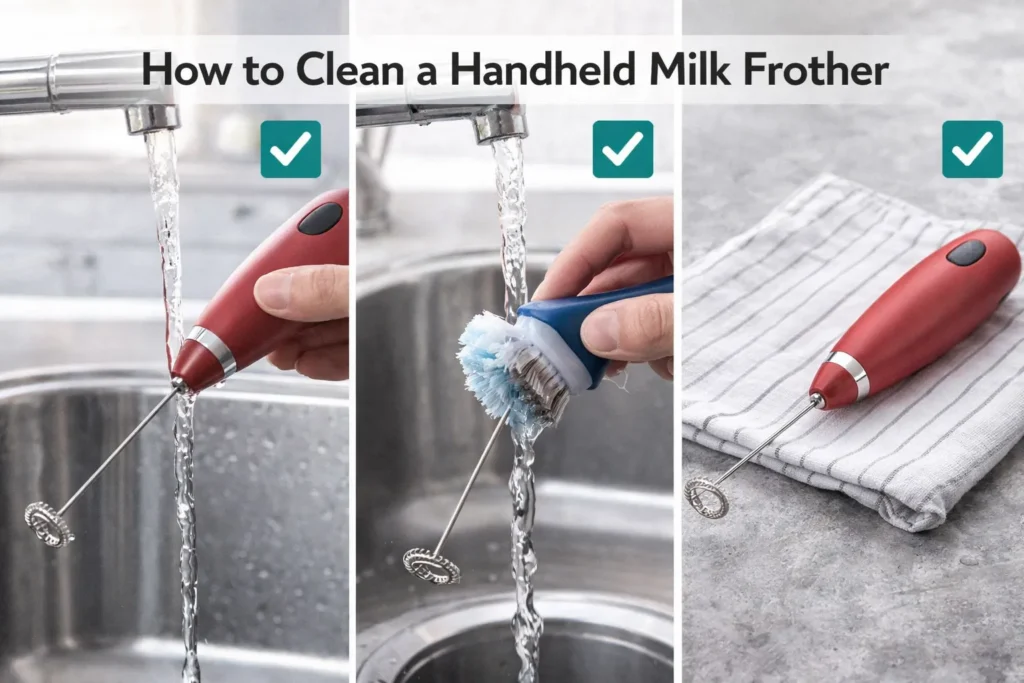
Cleaning a handheld milk frother is simple when you do it immediately after use. The easiest method is to rinse the whisk in warm water and briefly run the frother while the coil is submerged to shake off residue.
The handle should not be soaked unless the manufacturer allows it. Most of the cleaning focus belongs on the whisk, shaft, and any area where milk may dry and harden. Regular cleaning helps preserve foam quality and reduces the chance of the motor feeling weaker because of buildup.
Read more about how to clean a milk frother
Why Is a Handheld Milk Frother Not Working?
A handheld milk frother may stop working well because of weak batteries, incomplete charging, residue around the whisk, a bent shaft, a worn switch, or unrealistic expectations from the milk type being used.
Sometimes the frother is still running, but the user reads the problem as hardware failure when the real issue is technique. A wider cup, a deeper milk level, or plant-based milk with poor frothing performance can all make the result look weaker.
Read more about Milk frother not working
Handheld Milk Frother vs Automatic Frother
This comparison matters because many buyers are not deciding whether to buy a frother at all. They are deciding which frother type fits their daily routine.
| Type | Foam Quality | Speed | Convenience | Cleanup | Best For |
| Handheld | Good for simple foam, but more user-dependent | Fast for one drink | Very portable and easy to store | Usually quick | Budget buyers and light daily use |
| Automatic | More repeatable and often better textured | Fast once set up | Best for one-touch routines | Usually easy but more parts may be involved | Regular coffee routines and higher convenience |
A handheld frother is usually the better value option. An automatic frother is usually the better convenience option.
Handheld Milk Frother vs Manual Frother
| Type | Portability | Effort | Foam Control | Price | Best For |
| Handheld | Very high | Low physical effort | Good with practice | Low | Portable, quick daily use |
| Manual plunger | Moderate | Higher physical effort | Can be solid for larger batches | Low to mid | Users who prefer non-electric tools |
Handheld and manual frothers can both be budget-friendly, but they solve different problems. Handheld focuses on portability and speed. Manual focuses on simple no-battery operation.
What Should You Look for Before Buying a Handheld Milk Frother?
Before buying, check the power system, whisk durability, grip comfort, shaft strength, and how easy the unit is to clean. A handheld frother should feel light, but not weak. Very cheap units can look similar at first glance, yet differ a lot in motor stability and long-term reliability.
You should also think about your real use case. If you mainly froth oat milk for morning coffee, choose a model with stable power and comfortable handling. If you mainly want to mix matcha or travel with the frother, compact size may matter more. If you use the frother often, rechargeable is usually the smarter buy.
The best handheld milk frother is not simply the cheapest or the most powerful one. It is the one that fits your daily drink routine, storage space, and expectations for convenience.
Conclusion
A handheld milk frother is one of the most accessible frother types because it is affordable, compact, and flexible enough for coffee foam, matcha, and light drink mixing. It is an especially strong choice for users who want better drinks without giving up drawer space or spending on a larger machine.
Its biggest strengths are price, portability, and versatility. Its biggest limits are user-dependent texture, lack of built-in heating, and weaker performance for larger, more repeatable foam needs. For the right user, though, a handheld milk frother is often the smartest entry point into home milk frothing.
