
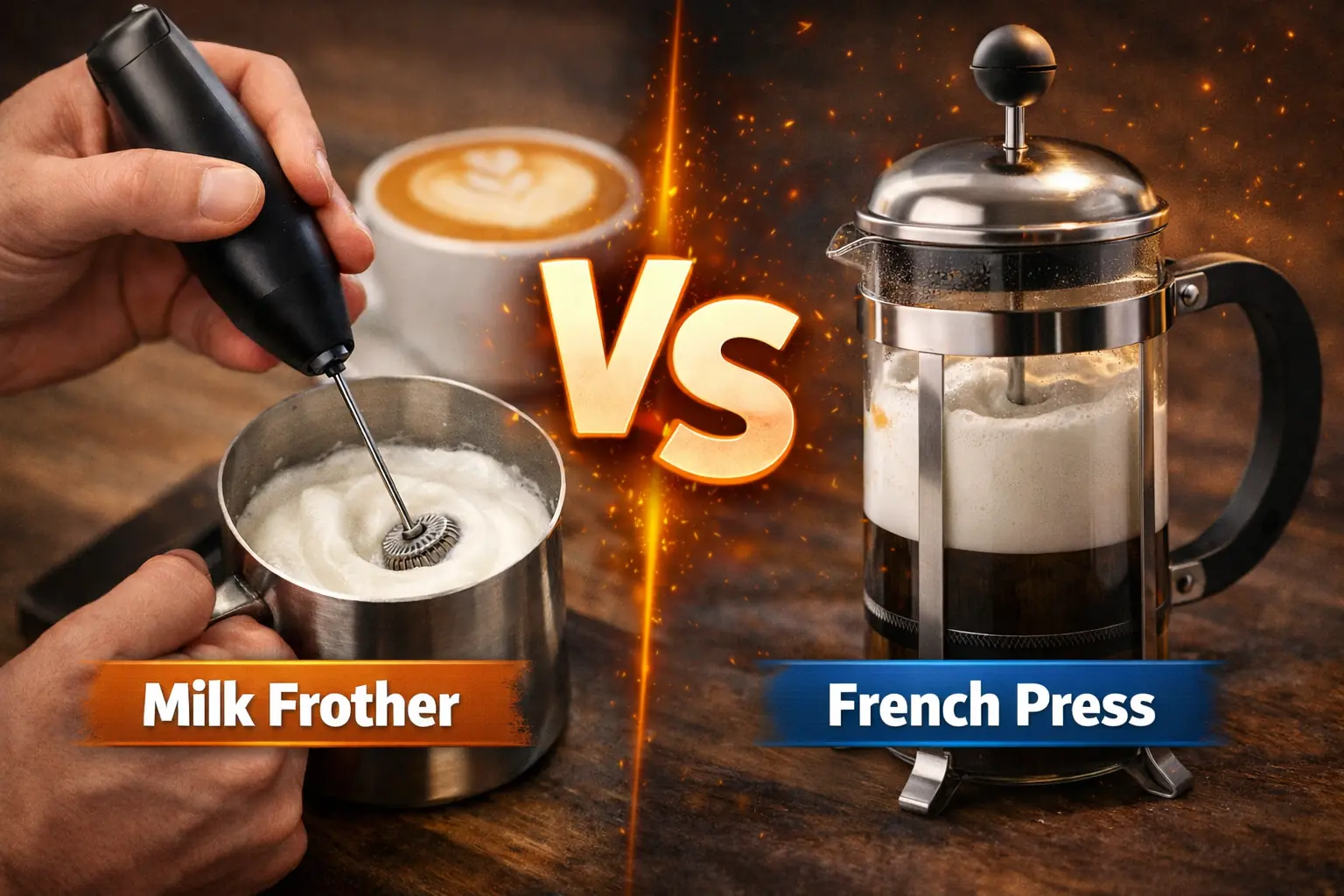
If you want the easiest and most repeatable way to make foam at home, a milk frother is usually the better choice. If you want a lower-cost, multi-use kitchen tool and do not mind a more manual process, a French press can still work well. That is the real comparison here: better foam convenience versus simpler budget-friendly flexibility.
What Is the Difference Between a Milk Frother and a French Press?
The main difference is that a milk frother is built specifically for making milk foam, while a French press is being used as a workaround method. A milk frother is designed to create foam more directly and more consistently. A French press can make foam too, but it does so through a more manual pumping method rather than through a tool made specifically for milk texturing.
That difference matters because it changes the whole home-use experience. One method is purpose-built and more convenient. The other is more improvised but can still be practical for certain users. The better choice depends on what the reader values most at home.
Which Makes Better Foam?
A milk frother usually makes better foam because it is designed to create a more repeatable result with less guesswork. For many home users, that means better texture consistency, easier foam production, and less variation from one cup to the next. The foam is often easier to predict, which matters if the reader wants steady daily results.
A French press can still produce usable foam, especially for simple home drinks, but the result is usually more dependent on user effort and technique. It can work well enough for occasional use, but it is less likely to give the same level of consistency as a dedicated frother.
Which Is Easier to Use at Home?
A milk frother is usually easier to use at home because it asks for less manual work and less judgment. The tool is already built around the task, so the user does not need to adapt another piece of kitchen equipment into a foam-making method. That makes it a better fit for daily users, beginners, and anyone who wants quick repeatable drinks.
A French press is still simple in a broad sense, but it is more manual and more variable. The user has to work the plunger, control the process by feel, and accept that the result may change more from one attempt to another. For casual foam making that may be fine, but it is usually less convenient than using a proper frother.
Which Is Easier to Clean?
A milk frother is often easier to clean when it is built for the task and kept to that purpose. The cleaning routine is usually more direct because the tool is being used in the way it was designed to be used. For readers who care about quick cleanup in daily routines, this matters more than it first appears.
A French press can still be easy enough to rinse, but it introduces a different kind of cleanup because it is a multi-purpose tool rather than a milk-specific one. That makes the experience feel less streamlined, especially if the user is switching between different uses in the kitchen.
Read more about >> How to clean a milk frother
Which Is More Affordable?
A French press often wins on cost if the buyer already owns one or wants the cheapest entry point into making foam at home. That is its biggest commercial strength in this comparison. It can serve more than one purpose, which makes it appealing to budget-conscious users or to readers who only make foamed milk occasionally.
A milk frother, however, often provides better value for people who plan to make milk drinks regularly. The upfront price may be more purpose-driven, but the convenience and consistency can make it feel more worthwhile over time. The better value depends on how often the tool will be used and how much the user cares about repeatability.
Who Should Choose a Milk Frother?
A milk frother is the better choice for readers who want convenience, better foam consistency, and a tool designed specifically for the job. It suits daily coffee drinkers, beginners, and users who do not want to experiment with manual milk frother every time they make a drink.
It is also the stronger fit for users who care about a more polished home result. If the reader wants a simpler path to repeatable foam, a milk frother usually makes more sense than relying on a French press.
Who Should Choose a French Press?
A French press is the better choice for readers who want to keep costs down, already own one, or only make milk foam occasionally. It is also appealing to buyers who prefer one multi-use kitchen tool rather than a more specialized device.
This makes it a practical option for budget-conscious users and for people who do not need the most refined foam result. If the reader is comfortable with a more manual process and accepts less consistency, a French press can still be a useful route.
How to Choose the Best Way to Make Foam at Home
The easiest way to decide is to ask what matters most. If the priority is better foam quality, faster daily use, and easier repeatability, a milk frother is usually the stronger option. If the priority is cost, flexibility, and making do with a tool that may already be in the kitchen, a French press can still be the better fit.
User type makes the answer clearer. The convenience buyer and daily user usually lean toward the frother. The budget user, occasional foam maker, and multi-use kitchen buyer may lean toward the French press. The right answer depends on how often the tool will be used and how much the user values consistency.
Final Recommendation
For most people who want the best way to make foam at home, a milk frother is the better choice because it gives easier, more consistent results and feels more practical in daily use. A French press still has a place for budget-minded users and for people who want a multi-use kitchen tool rather than a dedicated foaming device.
That means the best option depends on the user. Choose a milk frother for convenience and repeatability, choose a French press for budget and flexibility, use the manual frother and how-to pages for related paths, and use the root hub for the broader milk-foam decision journey.
