
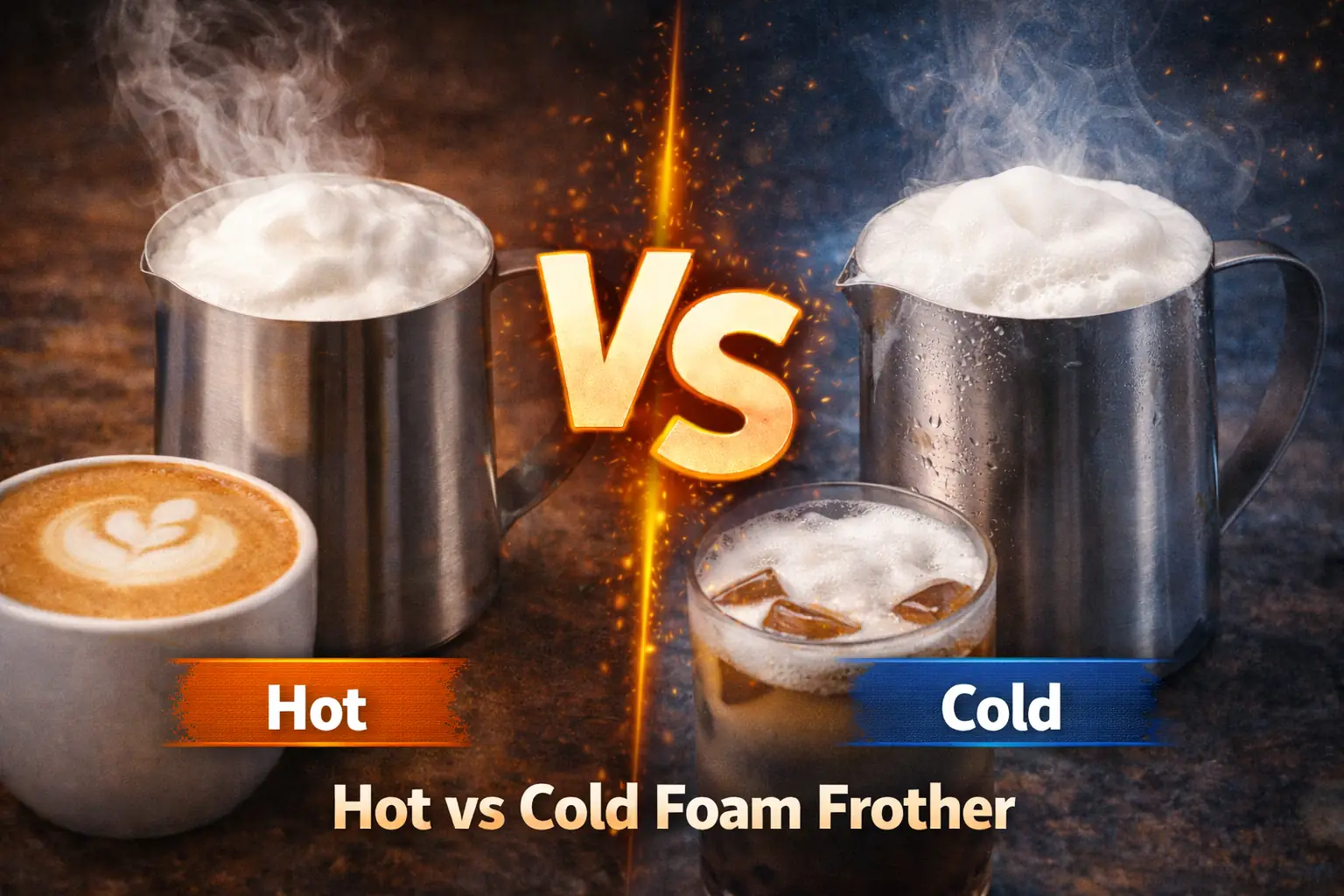
If you mainly make warm milk drinks, hot foam is usually the better choice. If you prefer iced drinks or want a lighter, colder topping style, cold foam is often the better fit. The real decision is not whether one foam style is universally better. It is which one matches your drinks, your milk preferences, and the kind of frother features you actually need.
What Is the Difference Between Hot Foam and Cold Foam?
The main difference is temperature, but the more important difference is how each foam style behaves in a drink. Hot foam is built for warm drinks and tends to feel fuller, more traditional, and more integrated into the cup. Cold foam is designed for chilled drinks and tends to feel lighter, fresher, and more distinct as a top layer.
That means the decision is not only about heat. It is about drink matching and texture experience. Some readers want a warmer, more classic milk-drink result. Others want a colder, more modern foam style that sits on top of iced coffee or similar drinks. The better choice depends on what the user drinks most often.
Which Drinks Work Better With Hot Foam?
Hot foam usually works better with warm coffee drinks where milk texture should feel blended into the drink rather than separated from it. It fits readers who want a more traditional café-style experience at home and who mainly prepare warm milk drinks rather than iced ones.
This is why hot foam is often the more natural starting point for many home users. It supports drinks that rely on warmth, comfort, and a fuller milk feel. If the reader’s routine is built around hot coffee drinks, hot foam usually becomes the more practical and satisfying default.
Which Drinks Work Better With Cold Foam?
Cold foam works better with chilled drinks where the user wants a distinct foam layer rather than a warmed milk texture blended throughout the cup. It suits readers who prefer iced coffee styles, lighter drink experiences, or a more modern foam presentation at home.
That does not make cold foam a niche option. It simply serves a different drink context. If the user regularly makes cold drinks or values a fresher and lighter foam experience, cold foam may feel far more useful than hot foam in daily practice.
Which Foam Style Is Better for Lattes and Cappuccinos?
For latte-style drinks, hot foam is usually the more natural match because the drink depends on warm milk texture that feels smooth and integrated.
Read More about >> Best milk frother for latte
For cappuccino-style drinks, hot foam also tends to be the more natural match because thicker warm foam expectations are part of the drink identity.
Read More about >> Best milk frother for cappuccino
Do You Need a Specific Frother for Hot Foam or Cold Foam?
Yes, the frother setup matters because not every frother handles hot and cold foam equally well. If the user wants both foam styles, it is often worth looking at an automatic milk frother that clearly supports separate settings or modes. That makes product selection easier and avoids buying a device that only performs well in one direction.
This is where product choice becomes part of the comparison. The page is not only about foam styles in theory. It is also about whether the buyer needs a frother that can reliably deliver the foam style they actually plan to use. If the reader wants flexibility across drink types, this section becomes one of the most commercially important parts of the page.
Does Oat Milk Work Better With One Foam Style?
Oat milk can work with both foam styles, but the better fit depends on the drink context and the texture the user wants. For warm oat-milk drinks, hot foam often feels more natural because it supports the fuller, café-style milk experience many readers expect. For iced oat-milk drinks, cold foam can still work well if the reader wants a lighter top-layer feel.
The important point is that oat milk should stay a supporting use case here, not the controlling topic. It helps the user understand how plant milk interacts with foam choice, but the page remains centered on hot versus cold foam rather than on ingredient comparison alone.
Who Should Choose Hot Foam?
Hot foam is the better choice for readers who mainly drink warm coffee beverages, want a more traditional milk-drink experience, or care about fuller foam integrated into the drink. It suits latte users, cappuccino users, and home drinkers who think of frothing as part of a warm coffee routine.
It also fits buyers who want a familiar café-style direction at home. If the reader sees foam mainly as part of warm morning drinks, hot foam is usually the stronger fit.
Who Should Choose Cold Foam?
Cold foam is the better choice for readers who mainly drink iced beverages, prefer a lighter and more separate foam layer, or want a different type of milk-topping experience. It suits iced-drink users, warmer-weather routines, and readers who want a fresher presentation rather than a traditional warm milk texture.
This makes cold foam especially useful for users whose drinks and habits already lean cold. If the reader rarely makes hot milk drinks, hot foam may matter much less than cold-foam capability.
How to Choose the Right Foam Style for Your Drinks
The easiest way to choose is to look at what you drink most often. If your routine is built around warm coffee drinks, hot foam is usually the better fit. If you mostly make iced drinks, cold foam may be the more valuable choice. The answer becomes even clearer when the reader connects foam style to product selection rather than treating foam as an abstract feature.
User type helps as well. Latte and cappuccino users usually lean hot. Iced-drink users usually lean cold. Plant-milk users may care more about how the frother handles both modes. The best choice depends on the drink pattern that the frother will actually support.
Final Recommendation
For most readers who make classic warm milk drinks, hot foam is the better choice because it matches latte and cappuccino use more naturally and feels more traditional in daily home coffee routines. Cold foam is the better choice for readers who mainly make iced drinks and want a lighter, more separate foam style.
That means the right foam style depends on the drink and the user. Choose hot foam for warm-drink routines, choose cold foam for iced-drink routines, use the automatic, latte, cappuccino, and oat milk pages for the next level of product or drink-specific comparison, and return to the root hub for the broader frother decision path.
