
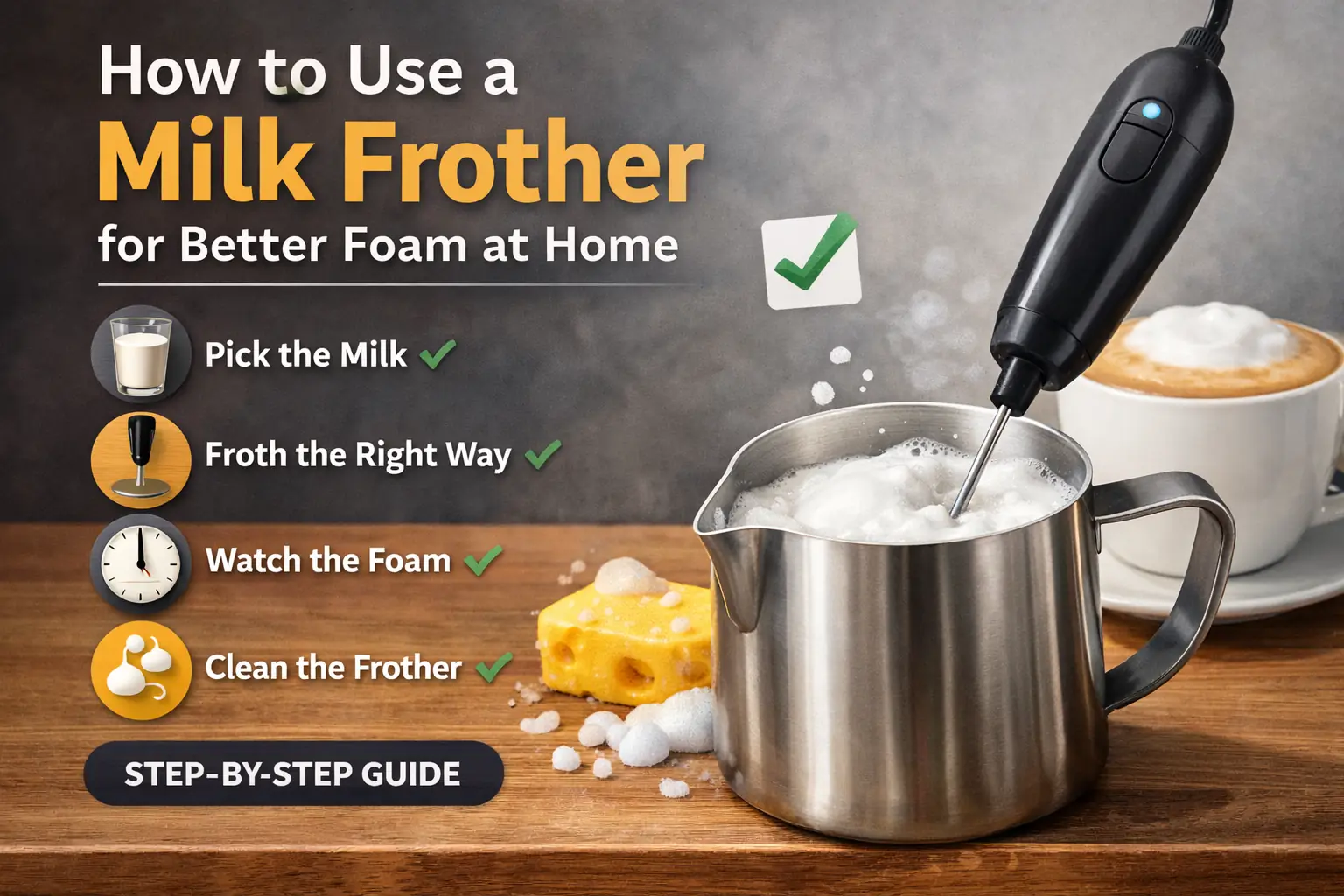
To use a milk frother, start with the right amount of milk, place the frother correctly, froth until the texture changes, and stop before the milk spills or turns uneven. The process is simple, but better foam comes from using the steps in the right order rather than just turning the frother on and hoping for the best.
What Is the Basic Way to Use a Milk Frother?
The basic method is simple: pour the milk into a suitable container, position the frother so it can move the milk properly, switch it on, and froth until the milk reaches the texture you want. After that, stop the frother, use the milk while the foam is fresh, and clean the device before residue dries on it.
That is the short version, but the details matter. Better foam usually comes from preparation, timing, and control. If those parts are wrong, even a working frother may produce weak or messy results.
What Do You Need Before You Start?
Before you start, make sure you have the milk, the right cup or pitcher, and a frother that is ready to use. The container should give the frother enough room to move the milk without causing overflow. The milk should not fill the container so high that the foam has nowhere to expand.
It also helps to decide what kind of result you want before you begin. If you want a smoother milk texture, the process may be shorter and more controlled. If you want thicker foam, you may keep the frother working a little longer. The point is to begin with a clear target instead of improvising mid-process.
Step-by-Step: How to Use a Milk Frother
First, pour the milk into your container and leave enough room for the foam to rise. Second, place the frother in the milk before turning it on so you do not create immediate splashing. Third, begin frothing and keep the frother positioned so it can move the milk evenly instead of bouncing wildly at the top.
Fourth, watch the texture change as the milk becomes lighter and fuller. Fifth, stop when the foam reaches the level and feel you want rather than continuing until the milk becomes unstable or messy. Finally, pour or use the milk quickly while the foam still looks fresh. This basic sequence gives the user one clear operating path instead of a scattered set of tips.
How Long Should You Froth the Milk?
You should froth the milk only until it reaches the texture you want. The exact time can change based on the frother type, the milk, and the amount in the container, so the user should watch the texture rather than depend on one rigid timing number.
The simplest rule is to stop once the milk looks fuller and the foam is stable enough for the drink you want. If you continue too long, the foam may become less controlled or the result may stop improving. Good timing is about reading the milk rather than chasing the longest frothing time possible.
How Do You Get Better Foam at Home?
Better foam usually comes from getting the basics right: enough space in the container, the right frother position, the right amount of time, and stopping before the milk turns messy or unstable. Many weak results come from overfilling the container, moving the frother badly, or continuing long after the best texture has already appeared.
It also helps to use the frother consistently. If the user changes the milk amount, container shape, and frothing method every time, the result becomes harder to control. Better foam comes from a repeatable method more than from random adjustments.
What Changes With a Handheld or an Automatic Frother?
A handheld frother usually gives the user more direct control over how the frother moves inside the milk, so the user has to manage the position and timing manually. That makes the basic method similar, but the user is more responsible for the outcome. This is where the handheld page becomes useful for readers who want the device-specific version of the process.
An automatic frother shifts more of the work to the machine. The user still needs the right milk amount and the right goal, but the operating steps feel more preset. That makes the automatic page the better next step for readers whose frothing process depends more on machine mode or settings than on manual hand control.
Can You Use Oat Milk in a Milk Frother?
Yes, you can use oat milk in a milk frother, but the result may differ from regular dairy milk. Oat milk can still foam, but the texture and stability may not behave exactly the same. That means the basic process stays the same, but the user may need to pay closer attention to texture and stop at the right moment.
Read more about Milk frother for oat milk
How Do You Use a Frother for Lattes and Cappuccinos?
For best milk frother for latte use cases, the user usually wants smoother milk texture with foam that feels more integrated into the drink. For best milk frother for Cappuccino use cases, the user often wants thicker foam with a stronger top layer. The base frothing method is the same, but the stopping point and the foam goal change.
Why Is the Milk Not Frothing Properly?
If the milk is not frothing properly, the problem is often in the setup, the timing, the milk choice, or the frother’s movement in the container. The user may be starting too close to the surface, overfilling the milk, or stopping too early or too late. In other cases, the device itself may need cleaning or a more specific fix.
That is why troubleshooting belongs after the basic method. The reader first needs a correct operational path. Only after that does it make sense to diagnose what is going wrong when the result still looks weak.
What Should You Do After Frothing?
After frothing, use the milk while the texture still looks fresh, then clean the frother before milk residue dries on it. Waiting too long after use can make cleaning harder and can affect future performance. A short after-use routine keeps the frother ready for the next drink and reduces buildup.
This final step is easy to skip, but it matters. Good frothing results do not come only from the main steps. They also depend on leaving the frother clean and ready for the next use.
Final Tips
The most effective way to use a milk frother is to follow one repeatable sequence: prepare the milk correctly, froth with control, stop when the texture is right, and clean the frother quickly after use. Readers who want better results should improve the method step by step rather than changing everything at once.
Use the handheld or automatic pages for device-specific differences, use the oat milk page if milk choice is changing the result, use the latte and cappuccino pages for drink-style goals, and return to the root hub for the broader milk-frother pathway.
