
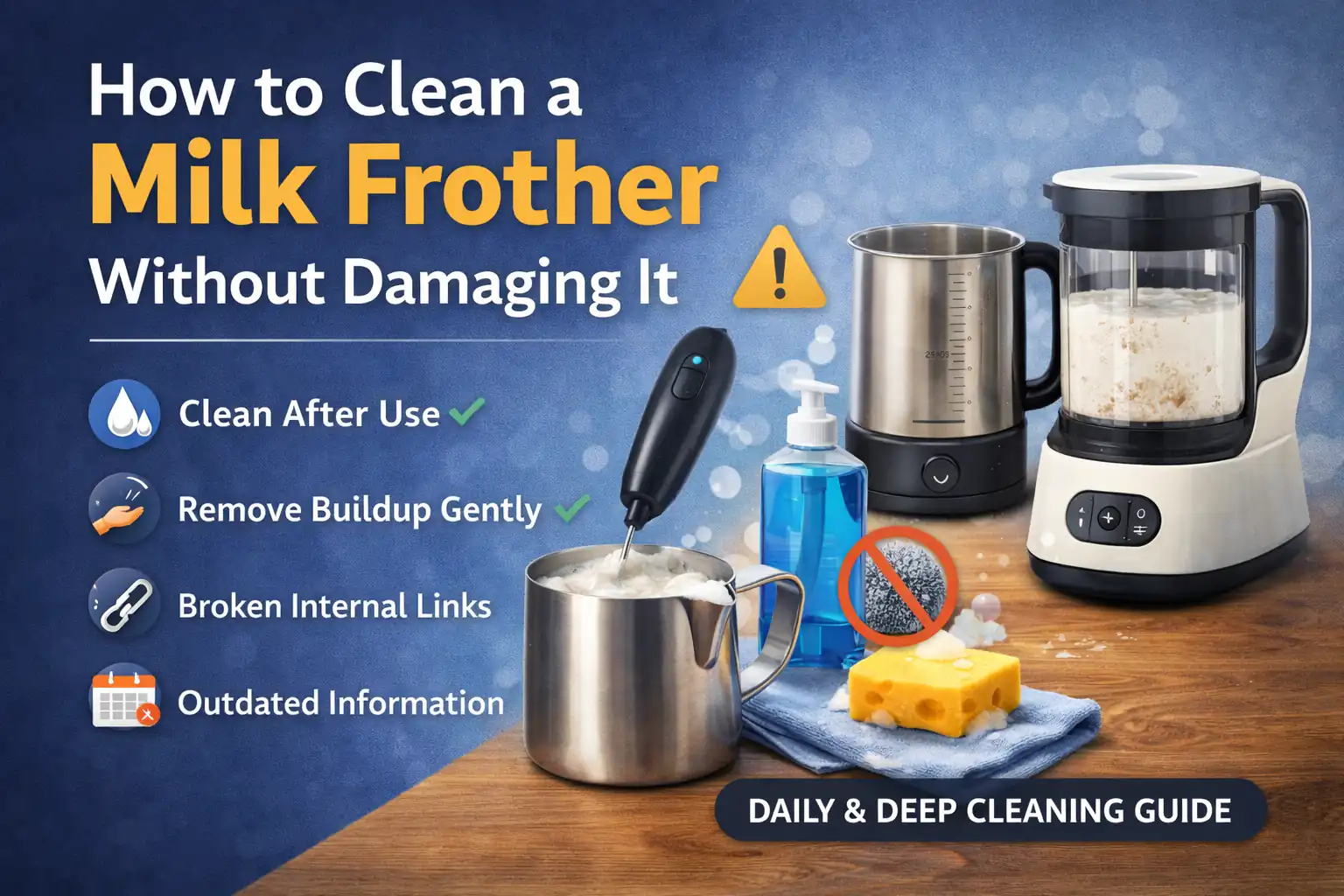
To clean a milk frother safely, remove fresh milk residue quickly, avoid letting buildup dry inside the unit, and adjust the cleaning method to the frother type. The goal is not just to make the frother look clean. It is to protect performance, avoid odor, and prevent long-term damage from dried milk or harsh handling.
What Is the Safest Basic Way to Clean a Milk Frother?
The safest basic method is simple: empty the milk, wipe or rinse the milk-contact areas soon after use, and avoid aggressive cleaning that could damage the motor, coating, or internal components. This keeps the frother clean without turning routine care into a risky deep-cleaning process.
The reason this matters is that milk residue hardens quickly. Once that happens, cleaning becomes more forceful, and forceful cleaning is exactly what raises the chance of damaging the frother. A safe method works best when it happens early and consistently.
How Do You Clean a Milk Frother After Each Use?
After each use, the best pattern is to empty the frother promptly, remove fresh milk residue before it dries, and leave the milk-contact surfaces clean enough that no film or smell is left behind. This quick routine usually matters more than occasional heavy cleaning because it prevents the main cause of buildup in the first place.
Daily cleaning should feel fast and repeatable. If the user waits too long, even a simple cleanup becomes harder. That is why after-use care is the most important habit in the whole maintenance process.
How Do You Remove Dried Milk Residue?
Dried milk residue should be removed with a gentler deep-cleaning approach rather than with scraping, force, or anything abrasive. Once milk has hardened, the user needs to loosen the buildup safely instead of treating the frother like a tough cookware item.
This is the point where many users create damage by rushing. If residue is stubborn, the answer is not harsher force. It is more patient cleaning. The goal is always to restore clean milk-contact surfaces without scratching, bending, or stressing the frother parts that affect performance.
What Changes With a Handheld, Electric, or Automatic Frother?
Cleaning changes slightly by frother type because the structure of the device changes the risk points. A handheld milk frother usually centers the cleaning process around the whisk head and the area most exposed to direct milk contact. An electric milk frother may involve more attention to the milk chamber and powered surfaces. An automatic milk frother may require even more care around lids, attachments, interior coatings, or heating-related parts.
The core cleaning logic stays the same across all three: clean early, remove residue safely, and avoid methods that create damage. What changes is how much care the user needs around the specific parts most exposed to milk, heat, or mechanical movement.
What Should You Avoid So You Do Not Damage the Frother?
The safest rule is to avoid anything that adds unnecessary force, heat stress, abrasion, or moisture risk to parts that are not meant to be handled aggressively. A milk frother is not difficult to clean, but it is easy to clean badly if the user treats every part the same way.
This is why damage prevention should be part of the cleaning method itself, not just a warning at the end. Cleaning the frother without damaging it means keeping the process controlled, gentle, and suited to the device type.
How Do You Prevent Milk Buildup Over Time?
Milk buildup is easiest to prevent through consistency rather than occasional heavy cleaning. If the user cleans the frother soon after use, keeps milk from drying inside, and avoids letting small residue layers accumulate over time, deep-cleaning problems become much less common.
This is also where daily care becomes more valuable than it first appears. A frother that looks mostly clean can still slowly collect residue that affects smell, foam quality, or reliability. Prevention works best when the user treats quick cleanup as part of the frothing routine rather than as a separate chore.
When Is It a Cleaning Problem vs a Troubleshooting Problem?
If the frother smells off, performs weakly, or behaves oddly after residue buildup, the issue may still be cleaning-related. But if the user has already cleaned it properly and the performance problem remains, the issue may have moved into troubleshooting rather than simple maintenance.
This distinction matters because not every bad result means the same thing. A dirty frother can act like a broken one. That is why cleaning should be ruled out first. Once cleaning is no longer the likely cause, the user needs a different diagnosis path.
What Should You Do After Cleaning?
After cleaning, the user should leave the frother ready for the next use rather than putting it away carelessly while moisture or residue remains. A proper after-cleaning routine helps preserve both cleanliness and reliability.
This final step matters because maintenance does not end when residue is removed. A frother that is cleaned properly but stored poorly can still develop avoidable problems later. Good after-care is part of the same cleaning system, not a separate task.
Final Tips
The safest cleaning routine is always the one the user can repeat consistently: clean soon after use, remove residue before it hardens, adjust the method to the frother type, and avoid forceful handling that creates damage. Use the handheld, electric, and automatic pages for type-specific support, move to troubleshooting if cleaning no longer explains the issue, and return to the root hub for the broader milk-frother content path.
