
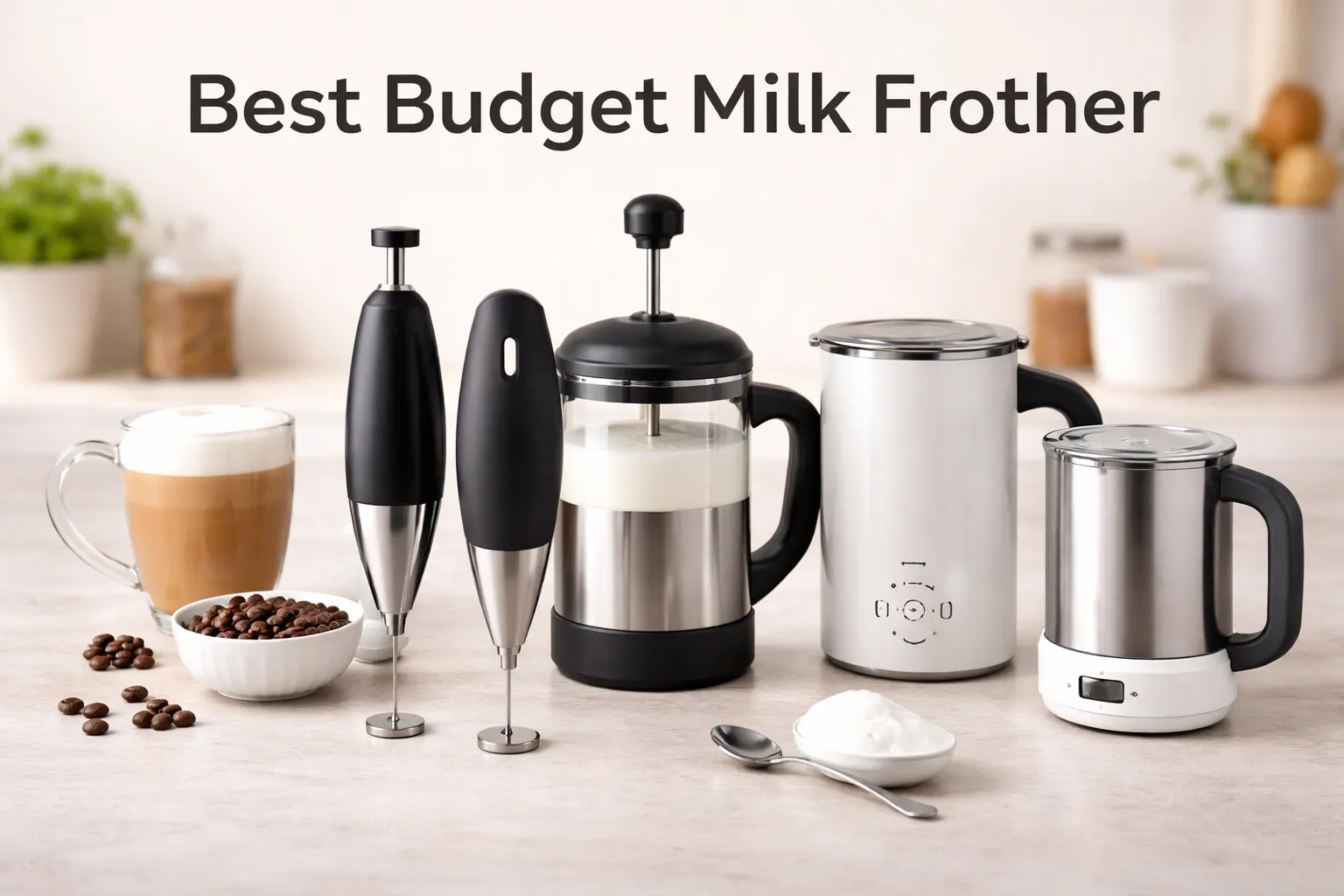
A budget milk frother is not just the cheapest option on the page. The better question is whether a lower-cost frother still matches the way you make coffee at home. Some buyers need a quick handheld wand for occasional lattes. Others want a manual plunger frother that does not rely on batteries or a plug. Some are willing to spend a little more for an entry-level electric milk frother because they want more convenience and more repeatable foam.
That is why the best budget milk frother depends on use case, not just price. A good low-cost frother should still make useful foam, feel easy to use, and last long enough to provide real value. It should also be honest about its tradeoffs. On a tighter budget, you usually compromise on materials, speed, or foam consistency before you compromise on basic usefulness. This page compares affordable milk frothers by type, value, and durability so the buyer can choose the lowest-cost option that still fits their daily coffee routine.
What Counts as a Budget Milk Frother?
A budget milk frother is an affordable model that gives home users enough performance for latte, cappuccino, or simple milk-based coffee without moving into premium pricing. In practice, the budget category usually includes handheld frothers, manual milk frothers, and a few low-cost electric options. The product qualifies as budget when its main appeal is value: acceptable foam, reasonable durability, and low entry cost.
A cheap frother is not automatically a good budget frother. The difference is value retention. A poor-value option feels flimsy, drains batteries too fast, breaks early, or creates weak foam that does not improve the drink. A good budget frother still solves a real problem for the buyer. It should fit a use case clearly, whether that means fast occasional foam, no-power portability, or simple countertop convenience at a lower price than premium models.
So when evaluating a budget milk frother, the real test is whether the lower price still delivers enough utility to justify the purchase. The best budget option is not the absolute cheapest one. It is the least expensive frother that still performs well enough for the drink style and frequency of use the buyer actually has.
Best Budget Milk Frother by Use Case
The best overall budget pick is usually the model that balances price, ease of use, and dependable foam for everyday home drinks. For many buyers, that will be a simple handheld frother because it is affordable, quick to store, and easy to replace if needed. A handheld milk frother works well for occasional lattes, cappuccinos, protein drinks, and hot chocolate, especially when the user is comfortable frothing directly in the mug or a separate pitcher.
The best budget pick for buyers who want more control is often a manual milk frother. Manual plunger frothers cost more than entry-level handheld wands in some cases, but they can still sit firmly in the budget category because they remove battery dependence and offer a more hands-on foam-building process. They make sense for buyers who want a simple device with fewer electronic failure points and a clearer sense of foam control.
The best low-cost electric frother usually fits buyers who want greater convenience and do not mind paying a little more for a countertop format. These models are still budget choices when compared with higher-end automatic frothers, but they should only be chosen when the buyer values one-touch convenience enough to justify the extra cost.
For latte use, a budget frother should create smooth enough milk to improve the drink without forcing the buyer into a premium appliance. For cappuccino, thicker foam matters more, so buyers may prefer a manual or electric model depending on how often they make the drink. For occasional use, handheld frothers often provide the best value. For durability-focused buyers, the best budget choice is usually the one with fewer weak parts, a sturdier shaft or plunger, and simpler maintenance requirements.
Handheld vs Manual vs Budget Electric
Handheld milk frothers are the cheapest and most accessible entry point. They are best for light use, minimal storage space, and buyers who want a fast tool for everyday drinks. Their biggest strengths are low price, convenience, and portability. Their main drawbacks are variable foam texture, battery dependence, and lower long-term durability in very cheap models.
Manual milk frothers usually suit buyers who want budget-friendly foam without depending on batteries or a plug. They can feel more stable and intentional than a handheld wand because the plunger mechanism creates foam in a dedicated jug rather than inside the mug. They ask for more effort, but that same effort gives the user more involvement in the result. They are a strong value option when the buyer wants simplicity and does not mind manual work.
Budget electric frothers sit above both of those in convenience. They usually cost more, but they may feel like the best value for buyers who make milk drinks frequently and want more repeatable results. The tradeoff is that lower-cost electric models may save money by using lighter materials, simpler controls, or smaller capacity. For a very tight budget, handheld and manual frothers remain the stronger value choices. For a slightly higher budget, an entry-level electric model can become the more practical long-term option.
What to Expect From a Cheap Milk Frother
A cheap milk frother should be expected to make useful foam, not premium café-level microfoam every time. In the budget range, buyers should expect at least one tradeoff. The lower price may show up in lighter materials, simpler construction, fewer foam modes, smaller capacity, or less refined texture. That does not mean the frother is a bad purchase. It only means the buyer has to match expectations to price.
Foam quality is often the first compromise. A budget handheld frother can still create foam, but texture may depend more heavily on milk temperature, milk type, and user technique. A manual frother can produce respectable foam, but it will ask for more effort. A budget electric frother may offer more convenience, but its build quality or lifespan may not match more expensive units.
Durability is the second major expectation point. Low-cost products can still last, but only if the buyer chooses a type that matches usage frequency. An occasional coffee drinker can often get excellent value from a cheaper frother. A daily heavy user may save money in the long run by stepping above the bottom tier. The key is not expecting a budget frother to behave like a premium machine, but expecting it to solve the buyer’s real daily need efficiently enough to be worth the spend.
What Features Matter Most on a Budget
Build quality matters more than long feature lists. In the budget range, simple construction often beats extra functions. A handheld frother should have a sturdy whisk shaft, a comfortable grip, and dependable battery housing. A manual frother should have a stable plunger, good mesh resistance, a useful pour design, and an easy-to-clean jug. A low-cost electric frother should focus on dependable heating or frothing performance before decorative controls.
Ease of cleaning is also essential. A budget frother loses value quickly if it becomes annoying to wash after each use. Buyers should favor designs that clean quickly, store easily, and do not create friction in daily use. Durability, foam quality, and cleanup together define whether a budget frother still feels like a smart purchase after the first few weeks.
Finally, value for money matters more than the headline price. A slightly more expensive option may still be the better budget pick if it lasts longer, feels easier to use, or better matches the drinks the buyer makes most often. Good budget buying is really about avoiding false economy.
Who Should Buy a Budget Milk Frother?
A budget milk frother is best for beginners, casual home coffee drinkers, and buyers who want to improve drinks without building an expensive coffee setup. It is also ideal for users testing whether they will actually use a frother regularly. A lower-cost model lets them experiment with latte, cappuccino, or foamed milk drinks without paying for premium convenience too early.
It also fits buyers with small kitchens, simple routines, or a narrow drink range. Someone who makes one or two milk drinks a day may not need anything complex. As any good milk frother buying guide would suggest, a budget frother can cover that need well, especially if the buyer chooses the right type. Handheld models suit fast and flexible use. Manual models suit budget buyers who want more control. Entry-level electric options suit people who want convenience but still want to stay price-aware.
Buyers who expect heavy daily use, café-style precision, or long-term premium durability may need to move above the budget category. But for many home users, a budget frother is enough because the goal is not perfection. The goal is affordable improvement.
When a Budget Frother Is Enough — and When to Upgrade
A budget frother is enough when the buyer wants practical foam for home coffee, uses the device moderately, and understands the tradeoffs that come with a lower price point. If the main goal is simple cappuccino foam, occasional lattes, or everyday milk drinks without a big equipment investment, budget models can be excellent choices. In that situation, value matters more than premium polish.
An upgrade becomes worth considering when the buyer starts to care more about repeatability, convenience, capacity, or durability than about the lowest possible price. Daily heavy use changes the math. If a person uses the frother multiple times a day, wants more one-touch simplicity, or is frustrated by inconsistent foam, then moving to a better electric or automatic model may save time and improve satisfaction.
The right budget choice should therefore feel like a smart fit, not a temporary disappointment. Buyers should stay in the budget range when it honestly covers their needs. They should move up only when their routine outgrows what lower-cost frothers can realistically deliver.
Final Verdict
The best budget milk frother is the one that gives the buyer the right balance of affordability, useful foam, and acceptable durability for their actual coffee routine. For the lowest cost, handheld frothers often provide the easiest entry point. For more control without power, manual frothers remain one of the strongest value options. For buyers willing to spend a little more for convenience, a budget electric model may offer the best long-term comfort.
FAQ
Is a budget milk frother worth buying?
A budget milk frother can be worth it if it matches the buyer’s drink habits and usage frequency. Lower-cost frothers work best when chosen by use case rather than price alone.
What is the cheapest useful milk frother type?
For many buyers, a handheld frother is the cheapest practical option. A manual frother can be a better value if the user wants no-power operation and more control.
Are cheap milk frothers durable enough?
Cheap milk frothers can last for home use, but durability depends on build quality and how often the device is used. Budget products usually perform better when expectations stay realistic.
When should I upgrade from a budget milk frother?
If the buyer wants occasional latte or cappuccino foam, a budget frother is often enough. If they want more repeatable results and heavier daily use, upgrading can make sense.
