
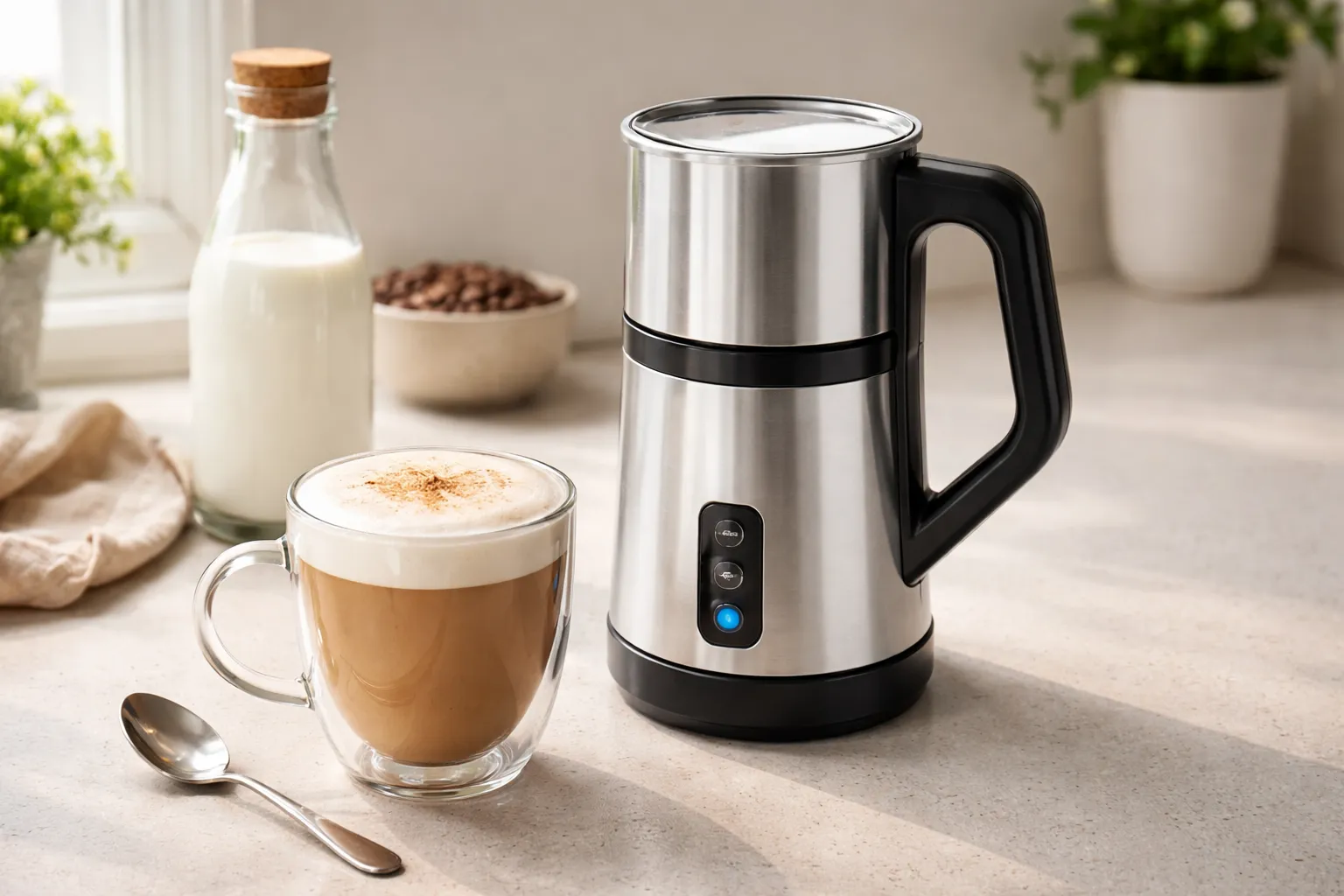
The best milk frother for latte is the one that produces smooth, pourable milk with enough volume for a full drink, not simply the one that creates the thickest foam. Latte drinkers usually need a softer texture than cappuccino drinkers, because the milk has to blend with espresso instead of sitting on top as a dry layer. That changes the buying criteria. Capacity matters more. Consistency matters more. Easy pouring matters more.
For most home users, jug-style automatic and electric frothers are the strongest options because they heat milk, handle a useful amount in one cycle, and repeat similar results day after day. Handheld and manual options can still work, especially at lower budgets, but they usually demand more effort and more compromise on texture. If you are still comparing all major categories first, start with the main best milk frother for home use guide before narrowing down the latte-specific choice.
What Makes a Milk Frother Good for Latte?
A good latte frother does not win by making maximum foam. It wins by making the right milk texture for a larger, smoother drink. In practical terms, that means fine bubbles, stable heat, enough capacity, and a pour that feels controlled instead of messy. A latte usually needs more milk than drinks with a smaller foam cap, so the machine has to handle volume without making the texture coarse or separated.
This is why many buyers choose the wrong product when they shop only by generic “froth” claims. A unit can make dramatic-looking foam and still be weak for latte use if the milk comes out too airy, too stiff, or too limited in quantity. The best frother for latte creates a balanced result: warm milk, a soft top layer, and a texture that still flows easily into the cup.
The ideal latte frother also fits the user’s routine. Daily drinkers usually benefit from one-touch operation, predictable cleanup, and dependable results. Occasional users may accept more effort if they save money. The best choice is not just about output quality; it is about how repeatable that quality is in real home use.
What Kind of Foam Does a Latte Need?
A latte needs smoother and more integrated foam than a cappuccino. In a cappuccino, the foam can be more obvious and more separate from the milk below. In a latte, the milk should feel softer and more unified, with only a light foam layer on top. The drink should look creamy rather than sharply divided.
That is why latte buyers should think in terms of pourable texture rather than dramatic height. Fine foam with smaller bubbles is usually more useful than thick, airy froth. If the milk looks too dry or too fluffy, it may sit on top of the espresso instead of blending naturally. The result can still be drinkable, but it will not feel like a strong latte-style outcome.
Heat also matters. Most home latte routines depend on hot milk, and the texture should stay smooth during the pour. Cold foam may be relevant for iced drinks, but for classic latte use it is a secondary feature. If you want a clearer feature-level explanation of temperature modes, the hot vs cold foam comparison page should be treated as a supporting bridge rather than the main decision page.
Best Milk Frother Types for Latte
Best overall type for latte
A jug-style powered frother is the strongest overall choice because it balances texture, heat, and milk volume. This is the safest recommendation for the average home user who wants better latte results without moving into a full espresso-machine setup.
Best automatic option for latte
When one-touch consistency matters most, an automatic milk frother is often the best fit. It simplifies the process, reduces technique errors, and is especially useful for buyers who want the same morning routine every day. Automatic units are strong for latte users because they usually handle hot foam well and reduce the chance of over-aerating the milk.
Best electric option for latte
If you want a broader powered category with stronger value flexibility, an electric milk frother is often the most practical starting point. Electric models cover a wider price and feature range, so they can serve both mid-budget and more quality-focused home buyers. They are often the best compromise between price, performance, and daily usability.
Best budget direction for latte
Budget buyers can still make latte-style drinks, but they usually need to accept more compromise. A handheld wand can froth milk cheaply, while a manual frother can give more hands-on control. Both can work for casual use, but neither is usually the strongest answer for the smoothest latte texture. Buyers in this range should prioritize realistic expectations over marketing language.
Best for occasional home users
If you only make lattes once in a while, an occasional-use solution can be enough. In that case, spending less can make sense, especially if ease of storage matters more than perfect repeatability. But once latte becomes a daily habit, the benefits of a stronger automatic or electric option become much easier to justify.
Automatic vs Electric Milk Frother for Latte
This is one of the most important decisions on the page because both categories can work well for latte, but they serve slightly different priorities. Automatic milk frothers are usually the better choice when convenience is the main goal. They emphasize preset behavior, one-touch use, and low-friction daily routines. For buyers who want the easiest path to repeatable hot milk and smooth foam, the automatic milk frother route is often the cleanest answer.
Electric frothers, by contrast, are the broader powered category. They often give buyers more options in price, capacity, and output style. That makes them attractive when value and flexibility matter as much as convenience. An electric milk frother can absolutely be the best choice for latte, especially when the buyer wants good texture but does not need the most guided, preset experience.
The practical decision rule is simple. Choose automatic if you care most about low effort and repeatability. Choose electric if you want a wider product range and a better balance between cost, capability, and long-term value. For many households, electric is the strongest general recommendation, while automatic is the strongest convenience-first recommendation.
Can a Handheld Frother Work for Latte?
Yes, but usually with limits. A handheld wand can create enough foam for a latte-style drink, especially for buyers with a tight budget or a very light use pattern. It is portable, inexpensive, and easy to understand. That makes it appealing for beginners.
The main weakness is texture control. Handheld frothers are good at injecting air quickly, but they are less dependable at producing the smoother, finer milk that most latte drinkers want. Results vary more by technique, milk temperature, and timing. Many users can get “good enough” results, but fewer get a consistently cafe-like latte texture.
So a handheld milk frother is best viewed as an entry-level or occasional-use option. It is not useless for latte. It is simply less ideal when smoothness, volume, and repeatability are the main priorities. For buyers who plan to make latte frequently, moving up to a jug-style powered unit usually improves both the drink and the routine.
Hot Foam, Milk Volume, and Pouring Control
Latte performance depends heavily on three linked variables: heat, capacity, and pour behavior. Most home latte drinkers want hot milk, not just frothed milk. The frother has to heat a useful amount while keeping the texture smooth enough to flow into a larger cup. If the unit creates good foam but only handles a small quantity, it can become inconvenient fast, especially when comparing hot vs cold foam results for different drink styles.
Milk volume matters more for latte than for many smaller coffee drinks because the beverage itself is milk-forward. A compact frother may still work, but the user may need multiple cycles or accept a smaller serving. That hurts convenience, especially for daily use. The best latte frother should produce enough milk in one run for the drink size the buyer actually makes.
Pouring control matters because latte milk should blend with espresso rather than land as a stiff topping. A good spout, steady texture, and balanced foam density all help here. Even buyers who are not trying to pour latte art still benefit from milk that moves cleanly and integrates naturally in the cup.
What to Look for Before Buying a Latte Frother
Start with output texture. The machine should be able to make smooth, fine foam rather than only thick or overly airy froth. For latte use, this is the most important quality filter because it changes how the drink feels from the first pour to the last sip.
Next, check milk capacity. Latte drinkers usually need more milk than buyers making foam-heavy drinks in smaller cups. A unit that looks attractive on paper can still become frustrating if its usable volume is too low. Capacity is one of the easiest areas to overlook and one of the fastest ways to regret the purchase.
Then check heat behavior and consistency. Most buyers want a frother that can warm milk evenly, hold a stable texture, and repeat that result without constant adjustment. Cleanup also matters more than many users expect. A strong latte frother should be easy enough to rinse or wipe down that using it every day does not feel like extra work.
Finally, consider the milk you use most often. If your routine depends on non-dairy milk, especially for everyday oat-based drinks, the choice can change. Some frothers handle plant milk better than others, and the best milk frother for oat milk page should be used as the main supporting route when latte buyers care about that compatibility.
Who Should Buy Which Type for Latte?
Daily latte drinkers usually get the most value from automatic or electric jug-style frothers. These users benefit from dependable heat, smoother output, and enough capacity to make the routine feel efficient. If latte is a regular morning habit, stronger consistency usually matters more than the smallest possible price.
Convenience-first buyers should lean toward automatic models. These are ideal for people who want fewer steps, fewer variables, and an easy button-driven routine. Value-focused buyers who still want strong latte performance should lean toward electric models, which often hit the best middle ground between output quality and price.
Budget-first or occasional users can still consider manual or handheld options. These choices make more sense when the user accepts extra effort, lighter texture control, or smaller improvements over basic home methods. They are not the strongest answer for most latte-focused buyers, but they can still be rational choices when cost and storage matter more than daily precision.
Non-dairy users form another important buyer segment. If oat milk is central to the routine, compatibility deserves more attention than it would on a generic buying page. In that case, this page should pass the user to the oat-milk-specific decision path rather than forcing all milk types under one recommendation.
Is a Milk Frother Worth It for Latte at Home?
For many home coffee users, yes. A milk frother makes latte drinks easier to repeat, improves texture, and gives buyers more control over quality without requiring a full cafe-style setup. The value becomes even clearer when latte is part of a frequent routine rather than an occasional treat.
The best answer usually comes down to matching the frother to the pattern of use. Automatic models are strongest for buyers who want convenience and repeatable one-touch results. Electric models are strongest for buyers who want a balanced mix of texture, volume, and value. Manual and handheld options can still work, but they are better seen as compromise paths rather than default winners.
So yes, a milk frother is worth it for latte at home when the buyer chooses for latte texture rather than generic foam. That is the key principle behind this page: smoother milk, enough volume, and dependable daily performance matter more than dramatic froth alone.
Quick FAQ
Is an automatic milk frother better for latte?
Often yes for convenience-first buyers, because automatic models make repeatable hot milk and smooth foam with less effort.
Can you make latte foam with oat milk?
Yes, but results depend on the frother and the oat milk itself. Compatibility matters enough that non-dairy users should compare with the oat-milk page.
What frother is best for latte art at home?
Usually a powered jug-style frother that creates smoother, finer, more pourable milk rather than thick dry foam.
Is a handheld frother enough for latte?
It can be enough for casual use, but it is usually not the top option when daily consistency and smoother texture matter.
