
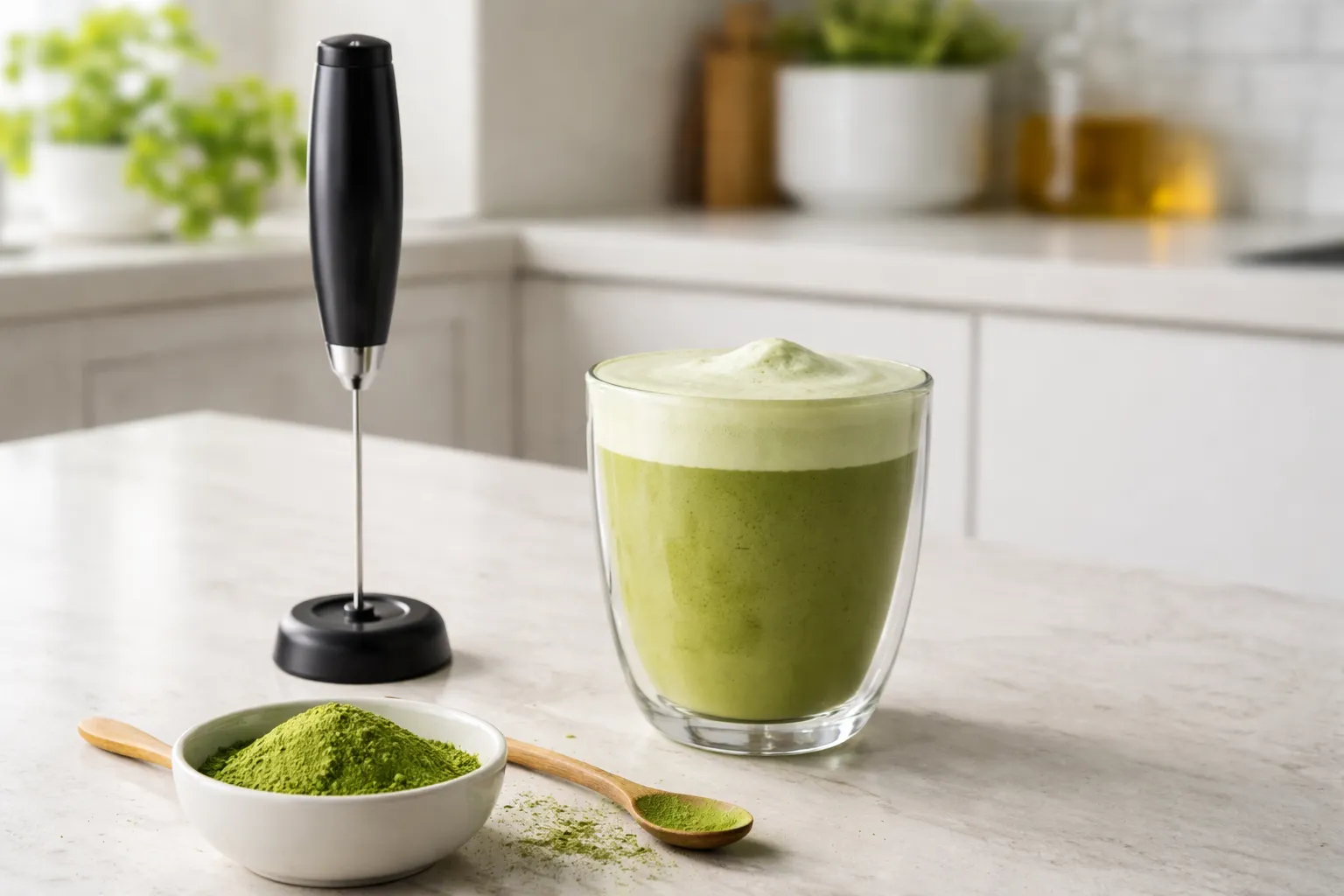
If you mainly drink matcha, the best milk frother is usually a handheld model that can mix powder quickly, break small clumps, and work directly inside a cup or bowl without much cleanup. Automatic milk frothers can still help in mixed-use kitchens, but for pure matcha convenience they are usually a secondary option rather than the first choice.
What Is the Best Milk Frother for Matcha?
The best milk frother for matcha is the one that gives fast agitation, smooth texture, and easy cup-level control. In most cases, that points to a handheld frother because matcha does not need thick milk foam first. It needs quick, even mixing so the powder dissolves smoothly and the drink does not stay gritty at the bottom.
For a daily matcha drinker, a light handheld frother is usually the strongest fit. For a buyer who also makes lattes, cappuccinos, or hot chocolate, an automatic frother can still be useful, but it should be chosen for mixed kitchen use rather than for matcha alone.
What Makes a Milk Frother Good for Matcha?
A good frother for matcha is not defined by foam depth alone. It is defined by how well it handles a fine powder in a small amount of liquid. Matcha can clump fast, especially when water is added too quickly or when the powder is not sifted first. The right frother reduces those lumps by spinning fast enough to disperse the powder before it settles.
The second requirement is control. Matcha is often prepared in a cup, mug, or shallow bowl, so the frother should be easy to hold at a low angle without throwing liquid over the edge. The third requirement is cleanup. Powders can cling to the whisk head, so a model that rinses quickly after use fits this context better than a bulky frother that needs more parts and more washing.
Which Type of Milk Frother Is Best for Matcha?
Not every frother type fits matcha equally well. Some are built for milk texture first, while others work better for direct mixing. For this page, the main comparison is about suitability for quick powder blending rather than for building café-style milk foam.
Handheld Milk Frothers for Matcha
Handheld frothers are usually the best fit for matcha because they can work directly in the serving cup or in a small mixing bowl. They are quick, simple, and well suited to light powders. A reader who wants the strongest matcha-specific option should normally start with the handheld category because it matches the need for rapid cup-level mixing better than larger countertop models.
This is also the most natural bridge to the handheld page, since that page covers the compact format, the way the whisk head works in smaller containers, and the buying logic for quick daily drinks.
Automatic Milk Frothers for Matcha
Automatic frothers can still be used for matcha, especially when the buyer wants one machine for several drink types. They are helpful in kitchens where the same device may be used for coffee drinks, warm milk, and occasional matcha. The tradeoff is that they are not always ideal for direct powder-first mixing because they are designed around heating and frothing cycles rather than tight manual control.
For that reason, an automatic frother fits matcha best when the buyer has mixed beverage habits. If matcha is the main reason for buying, handheld still tends to be the more efficient choice.
Manual Frothers for Matcha
Manual frothers can work, but they are usually less convenient for matcha than handheld electric models. They may be acceptable for someone who wants a non-electric option or already owns one, but they do not usually deliver the same quick agitation. In a page focused on quick mixing and smooth texture, manual options are usually secondary rather than primary recommendations.
What Features Matter Most in a Matcha Frother?
Once the type is clear, the next step is choosing the right features. In matcha use, the most important features are not the same as in cappuccino or latte use. The main goal is even powder dispersion with low mess and reliable day-to-day handling.
Whisk Speed and Mixing Control
A faster whisk head usually helps matcha break apart more quickly, but raw speed alone is not enough. The user also needs control. A frother that feels stable in the hand and does not jump too aggressively in shallow liquid is easier to use for small servings. The best models combine enough agitation to break clumps with enough control to keep the surface calm.
This matters because matcha often starts with a small amount of liquid before more is added. If the frother is awkward in that early stage, the drink can splash or stay uneven.
Cup Size, Bowl Size, and Splash Control
Container shape changes how the frother behaves. A deeper mug gives more room for movement, while a wide, shallow bowl may make splash control more difficult. That is why matcha buyers should think about where they actually prepare the drink. A frother that performs well in a narrow mug may behave differently in a broad bowl if the whisk head moves too close to the surface.
The most useful frothers for matcha are the ones that stay manageable in smaller liquid volumes and do not force the user into a large pitcher for every serving.
Rechargeable vs Battery Milk Frothers for Matcha
Power source affects convenience more than most buyers expect. A rechargeable frother is often the smoother long-term option for frequent matcha drinkers because it avoids repeated battery changes and can offer more consistent daily use. A battery-powered model can still work well, especially for lighter use, travel, or a lower upfront budget.
Read more about >> rechargeable vs battery milk frothers
Can You Use a Milk Frother Instead of a Traditional Matcha Whisk?
Yes, a milk frother can replace a traditional matcha whisk for many users, especially those who care more about speed and convenience than ritual. A bamboo whisk still has value for traditional preparation style and for users who enjoy that process, but a frother is often faster for weekday use and easier for people who simply want a smooth cup with less effort.
The difference is not just cultural. It is also practical. A traditional whisk gives a more classic preparation experience, while a frother usually wins on quick repetition. For a commercial adjacent-use page, the important point is that the frother becomes a stronger option when convenience is the main buying trigger.
Is a Milk Frother Good for Matcha and Other Powders?
Yes, many of the same frothers that work well for matcha also work well for other light powders and quick-mix drinks. That includes some supplement powders, drink mixes, and small protein additions. The key is that the powder should be light enough for the whisk head to disperse it effectively in a normal cup-sized serving.
This is also where the page can connect naturally to the protein shake subsection. The bridge should stay controlled, though. Matcha remains the main context, while protein mixing is treated as an adjacent reason that may increase the product’s value for the buyer.
How Do You Make Smooth Matcha With a Milk Frother?
Start by sifting the matcha if possible, because that reduces the chance of stubborn clumps. Add a small amount of liquid first rather than filling the entire cup immediately. Then place the frother low in the cup and begin mixing before raising it too close to the surface. Once the powder is dispersed, more liquid can be added.
The goal is smooth texture, not aggressive aeration. If the whisk head is lifted too early or spun too close to the top, the drink may splash and the surface may trap dry powder. A shallow, controlled mixing motion usually gives the cleanest result.
How to Choose the Best Milk Frother for Matcha
The best choice depends on how the buyer uses matcha. A daily matcha drinker usually benefits most from a handheld frother that is quick to grab, quick to rinse, and easy to use in a cup. A mixed-use buyer who prepares coffee drinks and occasional matcha may lean toward an automatic frother because it offers broader beverage value in one device.
Travel users and office users often care most about size, battery setup, and convenience. Budget buyers may accept a simpler model if it still has reliable whisk movement and does not feel weak in small servings. The main filter is simple: if matcha is the primary use, prioritize fast mixing and control. If matcha is just one of many drinks, mixed-use flexibility becomes more important.
Final Verdict on the Best Milk Frother for Matcha
For most readers, the best milk frother for matcha is a handheld model because it matches the real needs of matcha preparation: quick mixing, smooth texture, low-mess use, and easy cleanup. Automatic frothers still have a place, but mainly for buyers who want one machine for several drink types rather than for matcha alone.
That makes the decision path clear. Choose handheld for daily matcha convenience, compare rechargeable and battery options for power preference, use the protein shake subsection if multi-drink flexibility matters, and return to the root hub if you want the broader milk frother buying path across all use cases.
