
Introduction
An electric milk frother is a powered foam-making tool built for home users who want better texture and easier repeatability than a basic whisk-style frother can usually deliver. It sits in an important middle position in the milk frother market: simpler than a feature-heavy automatic frother, but usually more stable and consistent than a handheld unit for regular coffee routines.
This guide explains what an electric milk frother does, who should buy one, where it works especially well for latte and cappuccino drinks, how it handles hot and cold foam, and what trade-offs matter before buying as the best milk frother for home use. It also covers practical issues such as cleaning, troubleshooting, and the differences between electric, handheld, and automatic frothers so the buying decision stays clear.
What Is an Electric Milk Frother?
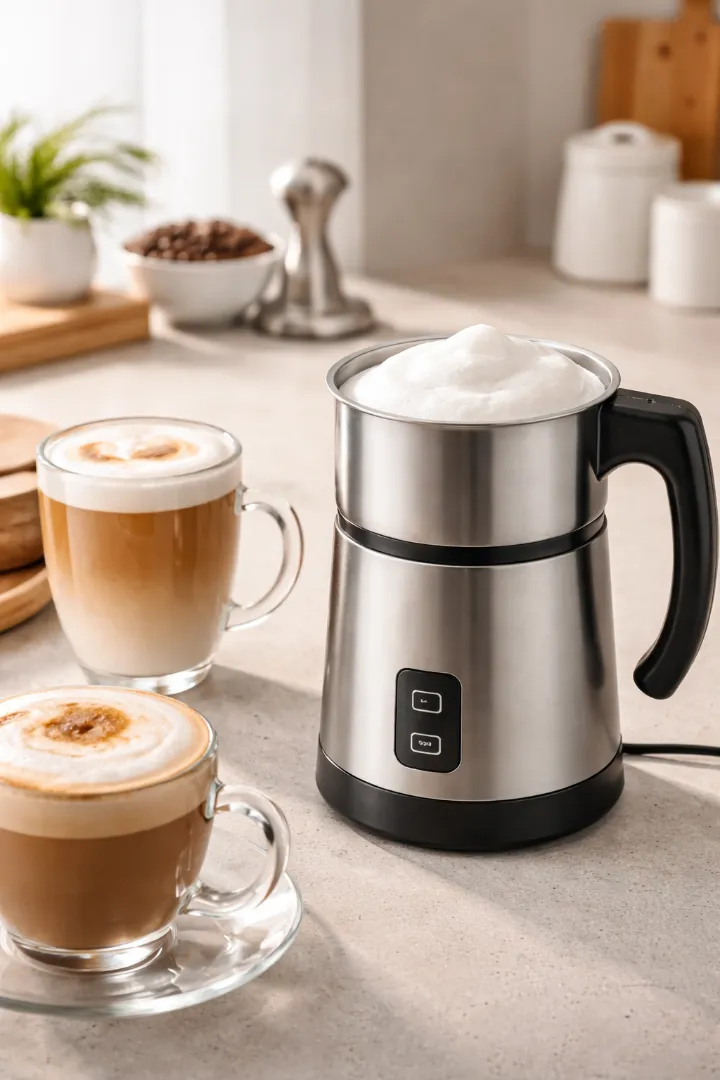
An electric milk frother is a powered device that uses a motor-driven whisk or internal frothing mechanism to create foam for home drinks such as lattes, cappuccinos, hot chocolate, and cold foam beverages. Some models only froth, while others also warm the milk at the same time.
In practical terms, an electric milk frother is designed for users who want stronger day-to-day consistency than a handheld frother, but who may not need the full one-touch program depth of a more advanced automatic unit. That makes it a strong value category for home coffee setups that prioritize convenience without becoming overly complex.
How Does an Electric Milk Frother Work?
An electric milk frother works by using powered motion to introduce air into milk and build texture more evenly than manual stirring can. In some units, a small whisk spins inside the container. In others, the motor works with a dedicated internal attachment designed to create foam while helping control movement more steadily.
Heating is the second key difference across models. Some electric frothers simply agitate the milk and rely on you to warm it separately. Others combine frothing and heating, which makes them more useful for regular home coffee routines. For users making daily lattes or cappuccinos, that heating feature often changes the value of the product far more than minor design differences do.
Who Should Buy an Electric Milk Frother?
An electric milk frother is a strong fit for people who make milk-based drinks at home regularly and want smoother, more repeatable results than a handheld model usually provides. It suits coffee drinkers who want latte or cappuccino-style foam, buyers who use oat milk often, and users who care more about routine convenience than maximum portability.
It is also well suited to buyers who want a dedicated countertop tool without moving all the way into espresso machine territory. If a handheld frother feels too basic for your needs, but an advanced automatic frother feels more expensive or feature-heavy than necessary, an electric milk frother often becomes the best balance point.
What Is the Best Electric Milk Frother for Most Users?
For most users, the best electric milk frother is one that combines stable foam quality, enough milk capacity for regular drinks, straightforward controls, and easy cleaning. Those factors matter more than minor styling differences because they affect how often the frother actually gets used.
A good electric frother should match the buyer’s drink pattern. Someone making one quick coffee per day may value compact size and easy storage. Someone making multiple lattes or cappuccinos may care more about capacity, heating, and repeatable texture. The best model is not automatically the one with the most features. It is the one that fits the user’s routine without adding friction to everyday use.
Pros and Cons of an Electric Milk Frother
Electric milk frothers are attractive because they improve consistency and reduce effort, but they are not ideal for every buyer. The trade-offs become clearer when the main strengths and limitations are set side by side.
| Aspect | Advantage | Limitation |
| Foam consistency | Usually smoother and more repeatable than handheld frothers | Still varies by model strength and milk type |
| Convenience | Powered operation reduces effort and daily friction | Needs power and may take more counter space |
| Heating | Some models warm and froth at the same time | Not every electric frother includes heating |
| Cleanup | Often easier than multi-part espresso tools | Can still require careful cleaning around lids and whisks |
| Milk volume | Better suited to regular drink preparation than small handheld tools | Larger size may be unnecessary for light users |
| Price | Often a strong middle-ground value category | Costs more than simple handheld frothers |
For many home users, the biggest benefit is predictability. An electric frother usually makes it easier to get acceptable foam every day without relying heavily on technique. The main drawbacks are price, space, and the fact that some units still need regular careful cleaning to stay reliable.
Is an Electric Milk Frother Good for Lattes and Cappuccinos?
Yes, an electric milk frother is often a very good fit for both lattes and cappuccinos because it usually delivers smoother, more stable foam than lower-effort manual mixing methods. The exact result depends on the model, but this subtype often handles regular home coffee routines more comfortably than a handheld frother.
For lattes, the goal is usually smoother, finer foam that integrates well with the drink rather than sitting too stiffly on top (best milk frother for latte). For cappuccinos, buyers often want more body and visible foam volume (best milk frother for cappuccino). A solid electric frother can support both outcomes, especially if it has enough power and a container designed for stable frothing. Users who mainly care about these two drinks should compare foam texture and milk capacity before anything else.
Can an Electric Milk Frother Froth Oat Milk and Other Non-Dairy Milk?
Yes, an electric milk frother can froth oat milk and many other non-dairy options, but results still depend on both the milk formula and the frother design. Oat milk is usually the safest plant-based starting point because it often creates smoother, more stable foam than almond milk.
Almond milk can froth, but performance varies more by brand and formulation. Soy milk can also work well, especially in products designed for barista-style drinks. For buyers who mainly use plant milk, electric frothers can be a better choice than simpler tools because the powered action often makes the result more repeatable. Even so, not every electric frother handles non-dairy milk equally well, so buyers should pay attention to capacity, power, and foam mode rather than assuming all units behave the same.
Can an Electric Milk Frother Make Hot and Cold Foam?
| Function | Best Drink Use | User Benefit | Common Limitation |
| Hot foam | Lattes, cappuccinos, hot chocolate | Combines warmth and texture for regular home coffee | Not all units heat evenly or hold large capacity |
| Cold foam | Iced coffee drinks and chilled milk-based beverages | Adds texture without warming the drink | Some lower-feature units do not offer this mode |
For daily coffee users, hot foam is usually the more important function. For buyers who enjoy iced drinks, cold foam can make the frother far more versatile. This is why feature matching matters more than broad category labels when comparing electric milk frothers.
How Do You Use an Electric Milk Frother?
Using an electric milk frother correctly is usually simple, but consistent results still depend on following a short sequence rather than guessing each time.
- Choose the right milk and keep the fill level within the recommended range.
- Select the correct function if the model offers different frothing or heating modes.
- Start the cycle and let the frother complete the process without overfilling or interrupting it too early.
- Match the finished foam to the drink style you want, especially if you are making lattes or cappuccinos regularly.
- Pour soon after frothing so the texture stays more integrated and usable.
- Clean the frother promptly after use to prevent residue from affecting later performance.
During publication, this section should link to the full how to use a milk frother page for a broader step-by-step guide.
How Do You Clean an Electric Milk Frother?
An electric milk frother should be cleaned soon after use because dried milk residue can affect smell, foam quality, and long-term reliability. This matters especially in units with lids, internal whisk attachments, or coated interiors.
Most buyers should follow the manufacturer’s cleaning instructions closely, especially around motorized or heated parts. In general, the safe pattern is to empty the unit promptly, rinse or wipe the milk-contact areas, and avoid letting residue harden inside. For fuller model-specific advice, see how to clean a milk frother.
Why Is an Electric Milk Frother Not Working?
An electric milk frother may stop working properly because of residue buildup, power issues, attachment problems, overheating protection, or simple user-technique mistakes. In some cases the machine still runs, but foam quality falls because the wrong milk or an overfilled container changes the result.
One of the most common practical issues is dried milk residue affecting the whisk area or the base of the container. Another is using milk volumes or settings that the unit does not handle well. For detailed information see milk frother not working guide for step-by-step troubleshooting.
Electric Milk Frother vs Handheld Frother
This comparison matters because many buyers are choosing between convenience and cost rather than between totally different drink goals.
| Type | Foam Quality | Convenience | Cleanup | Price | Best For |
| Electric frother | More stable and repeatable | Better for daily routines | Moderate | Mid | Regular home coffee users |
| Handheld frother | Good for light quick foam and mixing | Portable and very easy to store | Easy | Low | Budget buyers and lighter use |
An electric milk frother is usually the stronger choice for buyers who want better repeatability and less technique dependency. A handheld frother is often the better choice for users who care most about portability, lower cost, and simpler storage.
Electric Milk Frother vs Automatic Frother
Electric and automatic milk frothers can overlap, so this page needs a clear distinction: electric frothers are the broader powered subtype, while automatic frothers usually emphasize the most convenience-focused, one-touch experience with more guided modes.
| Type | Control | Consistency | Feature Depth | Price | Best For |
| Electric frother | Balanced and practical | Usually strong | Moderate | Mid | Users seeking value and regular home use |
| Automatic frother | Most convenience-focused | Very strong | Higher | Mid to high | Users wanting one-touch routine simplicity |
For many buyers, the decision comes down to whether extra convenience features justify the added cost. Electric frothers often win on balance. Automatic frothers usually win on ease and repeatability.
What Should You Look for Before Buying an Electric Milk Frother?
The most important buying checks are foam quality, heating capability, milk capacity, ease of cleaning, noise level, and how well the frother matches your main drink pattern. A user making one small coffee each morning does not need the same setup as someone preparing multiple lattes or cappuccinos per day.
Buyers should also check whether they need cold foam, whether they use plant milk often, and whether the design fits available counter space. If oat milk or other non-dairy options are central to the routine, performance with plant-based milk should matter more than cosmetic design details.
Milk frother buying guide usually comes from matching the frother to the routine, not from choosing the model with the longest feature list. For many people, the right electric milk frother is the one that offers stable daily results, easy cleanup, and enough flexibility for their most common drinks without overcomplicating the process.
Conclusion
An electric milk frother is one of the strongest middle-ground options in the milk frother market because it improves consistency, reduces effort, and usually supports more regular home drink routines than a simple handheld model.
It is especially valuable for users who want better latte and cappuccino foam, smoother results with less technique, and a buying decision centered on everyday practicality. Once published, this page should connect naturally to the root hub, the automatic frother page, the latte and cappuccino use-case pages, and the cleaning and troubleshooting support pages.
