
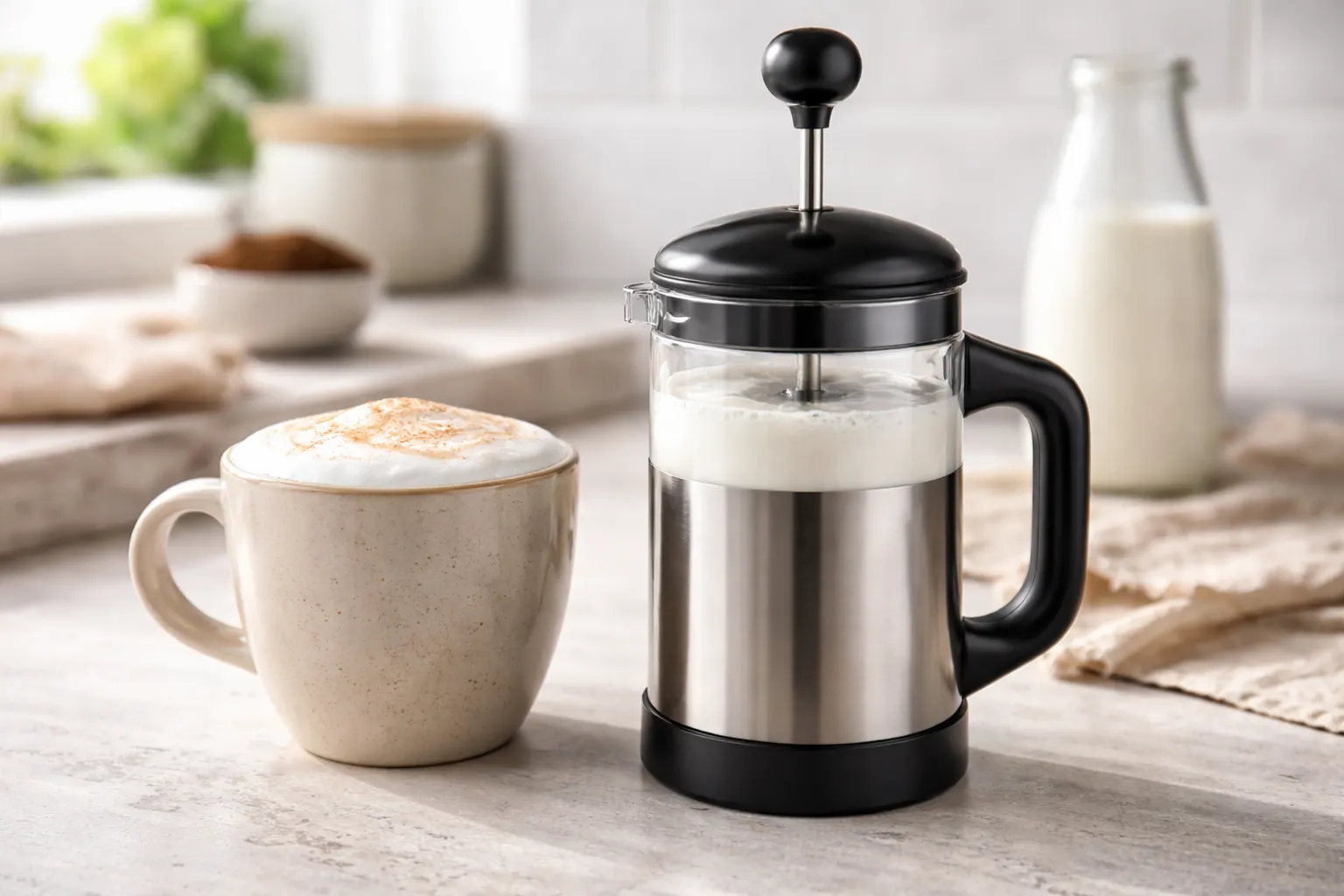
A manual milk frother is the simple, no-power option for people who want better coffee at home without buying an electric countertop machine. Instead of using a motor, it uses a plunger or pump-style mechanism to force air into milk and create foam. That makes it useful for latte, cappuccino, hot chocolate, and other milk-based drinks when the buyer wants lower cost, easier storage, and more hands-on control.
This milk frother matters because it serves a different user than automatic or electric frothers. A manual milk frother is usually chosen by a budget-conscious buyer, a beginner, a light-use coffee drinker, or someone who wants a straightforward frothing tool with fewer electronic parts. It will not match the convenience of one-touch machines, but it can still produce satisfying foam for everyday home coffee with less complexity and less expense.
What Is a Manual Milk Frother?
Manual Milk Frother Definition
A manual milk frother is a non-electric tool designed to turn milk into foam through physical pumping or plunging. Most models look like a small pitcher or jug with a lid and a mesh plunger inside. The user adds milk, secures the lid, and moves the plunger up and down until air is incorporated into the milk.
The key feature is that no plug, battery, or powered whisk is required. The foam comes from the repeated movement of the plunger, which breaks air into the milk and increases its volume. That makes the manual milk frother one of the simplest ways to create foam at home.
How It Differs From Other Milk Frother Types
A manual milk frother should not be confused with a handheld wand frother. A handheld frother uses a small battery-powered whisk, while a manual milk frother uses pump action inside a container. It is also different from an electric milk frother, which uses a motor and often adds heating, preset modes, or one-touch controls.
Compared with an automatic milk frother, the manual frother gives the user more physical involvement and less convenience, but often a lower price and fewer parts that can fail. Compared with a French press, a dedicated manual milk frother is built specifically for milk foam rather than coffee brewing first and frothing second.
How a Manual Milk Frother Works
Basic Frothing Process
The process is simple. First, warm the milk separately if the recipe needs hot foam, because most manual frothers do not heat milk by themselves. Next, pour the milk into the frother without overfilling. Then place the lid on top and move the plunger up and down repeatedly. After enough strokes, the milk becomes lighter, thicker, and more aerated. The foam can then be poured directly into the drink.
This makes the manual milk frother easy to understand even for a beginner. There are no digital settings to learn and no special programs to select. The user creates the result directly through technique.
Why Pumping Creates Foam
Pumping works because the plunger and mesh screen force air into the milk. As the milk passes through the screen again and again, small bubbles form and the texture changes. The final foam depends on several variables: milk type, temperature, fat content, how quickly the user pumps, and how long the process continues.
That is why manual frothers offer more hands-on control. The user can stop earlier for lighter foam or continue longer for more volume. The tradeoff is that consistency depends more on the person using it than on the machine itself.
What Kind of Foam Can a Manual Milk Frother Make?
Foam Texture You Can Expect
A manual milk frother can make light to moderately thick foam that works well for common home drinks. In many cases, the result is more than good enough for someone who wants a pleasant coffee experience without chasing café-level precision. The texture is usually airy, soft, and practical rather than highly polished.
Results can improve with practice. Warmer milk, the right fill level, and steady pumping usually produce better structure. Some users can get surprisingly full foam from a good manual frother, but expectations should remain realistic.
Is It Good Enough for Latte and Cappuccino?
Yes, for many home users it is good enough for both latte and cappuccino. A latte usually benefits from smoother milk with a lighter foam layer, while cappuccino generally needs thicker foam. A manual frother can support both styles when the user adjusts the amount of pumping and the type of milk being used.
Still, it is not the same as a high-end steam wand or a premium automatic frother designed for repeatable texture. Buyers who want maximum convenience or highly consistent foam every day may prefer a powered option. Buyers who mainly want simple, satisfying home coffee often find that manual frothers do enough.
Best Uses for a Manual Milk Frother
Everyday Home Coffee Drinks
A manual milk frother fits everyday drinks where the goal is simple foam rather than advanced café technique. It works well for latte, cappuccino, milky coffee, mocha, hot chocolate, and similar drinks. Because the frother creates foam inside its own container, pouring into the cup is easy and tidy.
This makes it especially useful for people who drink one or two milk-based coffees at home and want better texture without adding a more complex appliance to the kitchen.
Travel, Small Kitchens, and Low-Budget Setups
The manual frother also works well in places where power access, counter space, or budget is limited. Since it does not need electricity, it is easier to store, easier to carry, and easier to use in simple setups. Small apartments, student kitchens, office corners, and occasional-use coffee stations are all good matches.
For buyers who do not want another plugged-in machine on the counter, a manual milk frother offers a cleaner and simpler equipment profile.
Main Benefits of a Manual Milk Frother
Low Cost and No Electricity
One of the strongest selling points is cost. Manual milk frothers are often among the most affordable ways to make milk foam at home. Because there is no motor, heating element, or digital control system, the price is usually easier for beginners and budget-focused buyers to accept.
The lack of electricity also adds flexibility. There is no cord, no battery dependence, and no need to keep it near an outlet.
More Hands-On Control
A manual milk frother gives the user direct control over the process. The amount of pumping, the speed of the movement, and the time spent frothing all influence the final texture. Some buyers prefer this because it feels more flexible than a fixed preset mode.
That control can help when switching between a lighter latte-style texture and a fuller cappuccino-style foam. It also lets the user respond to different milk types instead of depending completely on automation.
Fewer Electronic Parts to Worry About
Because the design is mechanically simple, there are fewer parts that can break compared with electric or automatic frothers. This can be appealing for buyers who value durability, basic function, and easier maintenance over advanced convenience.
A simpler design also means less concern about buttons, heating systems, charging, or motor reliability. For many buyers, that simplicity is part of the value, not a limitation.
Downsides of a Manual Milk Frother
More Effort Than Automatic Options
The biggest limitation is that the user has to do the work. A manual milk frother does not offer one-touch convenience, automatic heating, or foam programs. If the buyer wants to press a button and walk away, this subtype is not the right fit.
This is the core tradeoff: lower cost and simpler design in exchange for more physical effort.
Foam Consistency Depends on Technique
Because the process is manual, results can vary. Two different users may get different foam quality from the same tool, and even the same user may produce slightly different results from day to day. Milk temperature, timing, pumping rhythm, and fill level all matter.
That does not make the manual frother weak. It simply means the buyer should understand that consistency comes more from user practice than built-in programming.
Not the Fastest Option for Frequent Use
A manual milk frother can feel slow for someone making multiple drinks every day. Warming milk separately, pumping by hand, and repeating the process for several cups is less efficient than using an electric or automatic frother.
For light use, this usually is not a problem. For heavy daily use, convenience may become more important than the money saved.
Manual Milk Frother vs French Press
Similarities Between the Two
A manual milk frother and a French press share an important trait: both can froth milk without electricity by using plunger action. That is why people often compare them. In both cases, repeated movement pushes milk through a mesh filter and adds air to the liquid.
This similarity makes the French press a common workaround for people who already own one and do not want a separate frothing tool.
Key Differences in Foam Control and Convenience
The difference is that a dedicated manual milk frother is built specifically for frothing milk. Its shape, plunger travel, capacity, and pouring behavior are usually optimized for that single job. A French press is primarily a coffee brewing device that can also froth milk, but that is not its main purpose.
A dedicated manual frother can be easier to handle, easier to pour from, and more predictable for repeat milk preparation. A French press may be more versatile overall, but versatility is not always the same as specialization.
Which One Is Better for Most Buyers?
For a buyer who mainly wants milk foam, a dedicated manual milk frother is usually the better choice. It is designed for the exact task and supports a cleaner, more direct workflow. For a buyer who wants one tool that can brew coffee and sometimes froth milk, a French press may offer better value.
The better option depends on whether the buyer prioritizes specialization or multipurpose use.
Who Should Buy a Manual Milk Frother?
Best Fit Users
This subtype suits beginners, budget-conscious buyers, and light coffee drinkers who want simple foam without a complicated appliance. It also suits users who appreciate a more hands-on process and do not mind warming milk separately. Someone making one or two milk-based drinks a day can get strong value from it.
It is also a practical fit for buyers who want fewer electronics in the kitchen or need a frother that is easier to store and transport.
Who May Need a Different Type Instead
A different frother type may be better for people who make many drinks daily, want fast repeatability, or specifically want hot and cold foam modes with minimal effort. Those buyers usually benefit more from electric or automatic frothers.
Likewise, someone seeking the most café-like texture with the least manual involvement may find a manual milk frother too limited for long-term satisfaction.
What to Look for Before Buying a Manual Milk Frother
Capacity and Size
Choose a size that matches the number of drinks usually prepared at one time. A very small frother may be fine for single-cup use, while larger households may need more capacity. The buyer should also consider whether the footprint fits the available storage space.
Plunger or Mesh Quality
The plunger is central to performance. A stronger mesh system and smoother pumping action usually support better aeration and more reliable foam. Weak or flimsy components can make the tool feel less controlled and less durable.
Handle, Lid, and Pouring Comfort
Comfort matters more than it seems. A good handle, secure lid, and easy pouring shape improve the daily experience and reduce spills. A frother that is awkward to hold can become frustrating even if its basic performance is acceptable.
Cleanup and Durability
Simple cleanup is part of the subtype’s value. Buyers should look for an interior that rinses easily (how to clean a milk frother) and a design that does not trap milk residue in difficult corners. Durable materials also matter because manual tools often rely on repeated mechanical use.
Price and Overall Value
The goal is not just to find the cheapest product. The better approach is to balance price with build quality, comfort, capacity, and expected lifespan. A slightly better-made manual milk frother can offer stronger value than the absolute lowest-cost option if it performs more reliably over time.
Is a Manual Milk Frother Worth It?
A manual milk frother is worth it for the buyer ( milk frother buying guide ) who wants simple foam without power, lower upfront cost, and a more direct, hands-on process. It is not the best choice for one-touch convenience, built-in heating, or maximum repeatability, but that is not the role it is meant to play.
Its real value comes from clarity of purpose. For home users who want an affordable, compact, and easy-to-understand tool for latte, cappuccino, and other milk-based drinks, the manual subtype can be an excellent fit. For users who want faster daily workflow or preset-driven consistency, a powered frother may be the better path.
Quick Comparison Snapshot
| Factor | Manual Milk Frother | French Press | Automatic Frother |
| Power needed | No | No | Yes |
| Main advantage | Low cost and control | Multi-purpose use | Convenience and presets |
| Best for | Simple daily foam | Existing French press owners | Frequent users wanting speed |
| User effort | Moderate | Moderate | Low |
| Consistency | Technique dependent | Technique dependent | More repeatable |
FAQ
Does a manual milk frother need electricity?
No. A manual milk frother uses plunger or pump action, so it can create foam without a power cord, battery, or built-in motor.
Can a manual milk frother make cappuccino foam?
Yes. It can make foam suitable for cappuccino, especially for home use, though the final thickness depends on the milk and the user’s technique.
Is a manual milk frother better than a French press?
It is usually better if the main goal is milk frothing because it is built for that specific task. A French press is better when the buyer wants one tool that can do multiple jobs.
Are manual milk frothers good for beginners?
Yes. They are usually simple to understand, affordable, and easier to maintain than many powered frothers, which makes them a strong entry-level option
