
Introduction
A milk frother is a small kitchen tool that adds air to milk so it becomes light, creamy, and foamy for drinks such as lattes, cappuccinos, flat whites, hot chocolate, and even matcha. For most home users, the real value of a milk frother is not only foam itself, but also control. It lets you make cafe-style drinks at home without needing a full espresso machine or a complicated setup.
This guide explains which type of milk frother is best for home use, how the main frother categories differ, which options fit specific drinks and milk types, and what to look for before buying. It also covers the practical parts many buyers ignore at first – daily use, cleaning, and common problems – so you can choose a model that actually matches your routine.
What Is a Milk Frother?
A milk frother is a device designed to create foam by rapidly mixing air into milk. Depending on the model, it may only whisk the milk, or it may both heat and froth it at the same time. That difference matters because some users only need quick foam for coffee, while others want one-touch hot and cold milk preparation.
In practical terms, a milk frother changes texture. Instead of plain liquid milk, you get a softer, lighter layer that can sit on top of coffee or blend into it. Handheld frothers usually create fast, simple foam. Automatic countertop frothers are better at producing more consistent texture and temperature. Manual frothers give you more control without requiring power, but they take more effort.
Who Should Buy a Milk Frother for Home Use?
A milk frother is a smart buy for anyone who regularly makes milk-based drinks at home and wants a better texture than stirring with a spoon can provide. It suits coffee drinkers who want lattes or cappuccinos, people who use oat or almond milk, and users who prefer a compact tool instead of a larger espresso setup.
It is also useful for buyers who care about convenience. A handheld unit works well for quick morning drinks or occasional matcha. An automatic frother fits people who want hot and cold foam with minimal effort. A manual frother suits users who want a simple tool with no battery, charging, or countertop electronics to manage.
What Is the Best Milk Frother for Most Home Users?
For most home users, the best milk frother type is an automatic or electric countertop model because it balances ease of use, foam consistency, and convenience. It usually gives better repeatable results than a handheld frother and requires less effort than a manual option.
A handheld milk frother can still be the best choice for budget-focused buyers or people who mainly want quick foam for coffee, protein drinks, or matcha. A manual frother can be a better fit for users who want a low-maintenance tool and do not mind pumping by hand. The best option is the one that matches how often you make drinks, what kind of milk you use, and whether you need heating built in.
What Types of Milk Frothers Are Available?
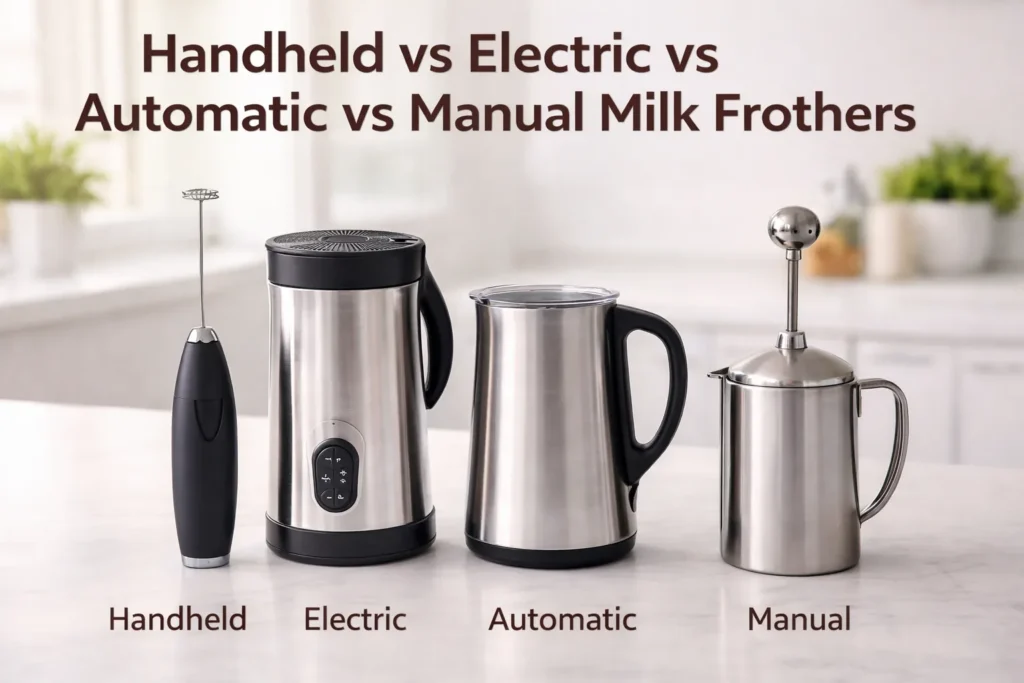
The four main types of milk frothers are handheld, electric, automatic, and manual.
Handheld milk frothers are slim whisk-style tools that spin quickly in a cup or pitcher. They are affordable, portable, and easy to store, but the foam quality can vary depending on the milk and user technique.
Electric milk frothers use powered mechanisms to whisk milk with more stability than handheld models. In many cases, they are countertop tools built for more regular use and a better foam texture.
Automatic milk frothers are the most convenience-focused type. They usually offer one-touch programs for hot milk, hot foam, or cold foam, making them ideal for repeatable home drink routines.
Manual milk frothers rely on a plunger or pump mechanism. They do not need electricity, which keeps them simple, but they require more physical effort and usually suit smaller, less automated routines.
Handheld vs Electric vs Automatic vs Manual Milk Frothers
The easiest way to choose a frother is to compare the main types by foam quality, convenience, cleanup, and who they suit best.
| Type | Foam Quality | Ease of Use | Cleanup | Typical Price | Best For |
| Handheld | Good for light daily foam, but less consistent | Very easy | Easy if cleaned right away | Low | Budget buyers, quick coffee, matcha |
| Electric | More stable texture than handheld | Easy | Usually easy | Low to mid | Frequent home coffee use |
| Automatic | Best repeatability for hot and cold foam | Very easy | Moderate, depends on jug design | Mid to high | Users who want one-touch convenience |
| Manual | Can make solid foam with practice | Moderate | Easy | Low to mid | Simple routines with no battery or plug |
Which Milk Frother Is Best for Lattes, Cappuccinos, and Oat Milk?
Different drinks need different foam styles. Lattes usually need smoother, finer foam. Cappuccinos need more body and volume. Oat milk works best when the frother can build stable foam without overheating or thinning the texture.

| Use Case | Best Frother Type | Why It Fits | Related Guide |
| Latte | Automatic or electric | Produces smoother foam and handles larger milk volume more easily | Best Milk Frother for Latte |
| Cappuccino | Automatic | Better for thicker foam and repeatable texture | Best Milk Frother for Cappuccino |
| Oat milk | Automatic or strong electric | Handles plant milk more consistently and helps control foam texture | Best Milk Frother for Oat Milk |
| Matcha | Handheld | Fast mixing for lighter drinks and powders | Best Milk Frother for Matcha |
| Budget pick | Handheld or manual | Keeps cost low while still improving texture over manual stirring | Best Budget Milk Frother |
If your main goal is cafe-style lattes and cappuccinos, a countertop automatic frother is usually the safest choice. If you mainly want a simple way to mix matcha or add light foam to everyday coffee, a handheld model often provides enough value without taking up extra space.
Which Milk Works Best in a Milk Frother?
Whole dairy milk generally produces the richest and most stable foam because its fat and protein balance supports both volume and texture. Semi-skimmed milk can still froth well, but the result is usually lighter. Skimmed milk often creates more volume, but the foam can feel drier and less creamy.
Among plant-based options, oat milk is usually the easiest to froth and the most popular for home coffee drinks. It tends to create a smoother texture than almond milk and often performs better in both handheld and automatic frothers. Almond milk can froth, but results vary more by brand and formulation. Soy milk can also produce decent foam, especially in products designed for barista-style use.
The best choice is not only about taste. It is about stability, heat tolerance, and how the milk behaves with your preferred frother type. Users who rely on non-dairy milk should pay closer attention to automatic frothers or stronger electric models because consistency matters more when the milk base is less forgiving.
How Do You Use a Milk Frother?
Using a milk frother correctly makes a major difference to foam quality. The basic process is simple, but the details – milk level, temperature, positioning, and cleanup timing – affect the result.
- Choose the right milk and the right container. Leave enough room for the milk to expand.
- Warm the milk first if your frother does not heat automatically. Milk that is too cold may foam more slowly and less evenly.
- Position the whisk or frothing element just below the surface at the start, then adjust as the foam builds.
- Stop when the texture matches your drink. Lattes need smoother foam; cappuccinos need more volume and body.
- Pour the milk soon after frothing so the foam does not separate too much from the liquid.
- Clean the frother immediately after use, especially if milk residue has reached the whisk, lid, or inner wall.
For a more detailed walkthrough, this page should later link to the full how to use a milk frother guide.
How Do You Clean a Milk Frother?
Cleaning a milk frother right after use is the easiest way to keep foam quality strong and prevent odor, residue, or motor strain. Dried milk is one of the main reasons frothers start performing poorly over time.
For handheld frothers, rinse the whisk immediately and run it briefly in warm water to remove residue. For automatic and electric frothers, follow the manufacturer’s instructions carefully, especially around the lid, whisk attachment, and non-stick inner surface. Manual frothers should be washed thoroughly around the mesh or plunger mechanism.
Why Is a Milk Frother Not Working?
A milk frother may stop working properly because of battery weakness, charging issues, residue buildup, a damaged whisk, motor wear, or poor technique. In some cases, the frother still spins, but the foam quality drops because the milk type or the frothing angle has changed.
With handheld frothers, low battery power is one of the most common reasons for weak performance. With automatic frothers, residue on the inner base or whisk can stop the machine from spinning at full strength. Manual frothers usually fail because of worn mesh or inconsistent pumping pressure.
Milk Frother vs Steam Wand
A steam wand can produce excellent texture, but it usually demands more practice, more equipment, and more cleanup than a standard milk frother. For most casual home users, a milk frother is the easier option because it simplifies the process and reduces the skill needed to get usable foam.
A steam wand makes more sense for users who already have an espresso machine and want maximum control over milk texture. A milk frother is usually better for users who want a separate tool for quick daily drinks, plant milk foam, or one-touch convenience.
| Method | Foam Texture | Learning Curve | Cleanup | Cost | Best User |
| Milk frother | Consistent and easy to repeat | Low | Easy to moderate | Low to mid | Home users who want convenience |
| Steam wand | Highest control when used well | Higher | Moderate to high | Higher if machine is required | Users with espresso machines and practice |
To Read more check ==> Milk frother VS Steam wand
Milk Frother vs French Press
A French press can make foam, but it is still an improvised method rather than a true frothing tool. It can work for occasional use, but most buyers looking for repeatable texture, quicker preparation, and less mess will prefer a dedicated milk frother.
| Method | Foam Texture | Learning Curve | Cleanup | Cost | Best User |
| Milk frother | Designed for consistent froth | Low | Easy to moderate | Low to high depending on type | Users who want a dedicated tool |
| French press | Can froth, but less specialized | Low to moderate | Moderate | Low if already owned | Occasional users improvising at home |
To Read more check ==> Mil frother Vs French press
What Should You Look for in a Milk Frother Buying Guide?
The best milk frother for you depends on use pattern, not just on the product category. Before buying, decide whether you need hot foam, cold foam, or both. Think about your main drink type, the volume of milk you usually prepare, and whether you use dairy, oat, almond, or soy milk most often.
You should also check cleaning difficulty, whisk durability, charging or battery system, noise level, and available space. Countertop automatic frothers take up more room, but they often deliver the smoothest daily routine. Handheld units save space and money, but they depend more on user control. Manual frothers remove battery or charging concerns entirely, but they are slower and more effort-based.
If you want the safest all-round choice for regular home coffee, start with an automatic or solid electric frother. If you care most about price and flexibility, look at handheld or manual models. The right buying decision comes from matching the frother to your routine, not from assuming the most expensive option is automatically the best.
Conclusion
A milk frother is one of the easiest ways to improve home coffee drinks because it changes texture, not just presentation. The right type depends on whether you prioritize convenience, budget, drink style, and milk compatibility.
For most home users, automatic and electric frothers offer the best balance of ease and repeatable results. Handheld frothers remain strong value options for lighter daily use, while manual frothers suit buyers who want simplicity without batteries or a plug. Once this page is published, it should work as the main routing hub for the type, comparison, maintenance, and troubleshooting pages in the milk frother cluster.
