
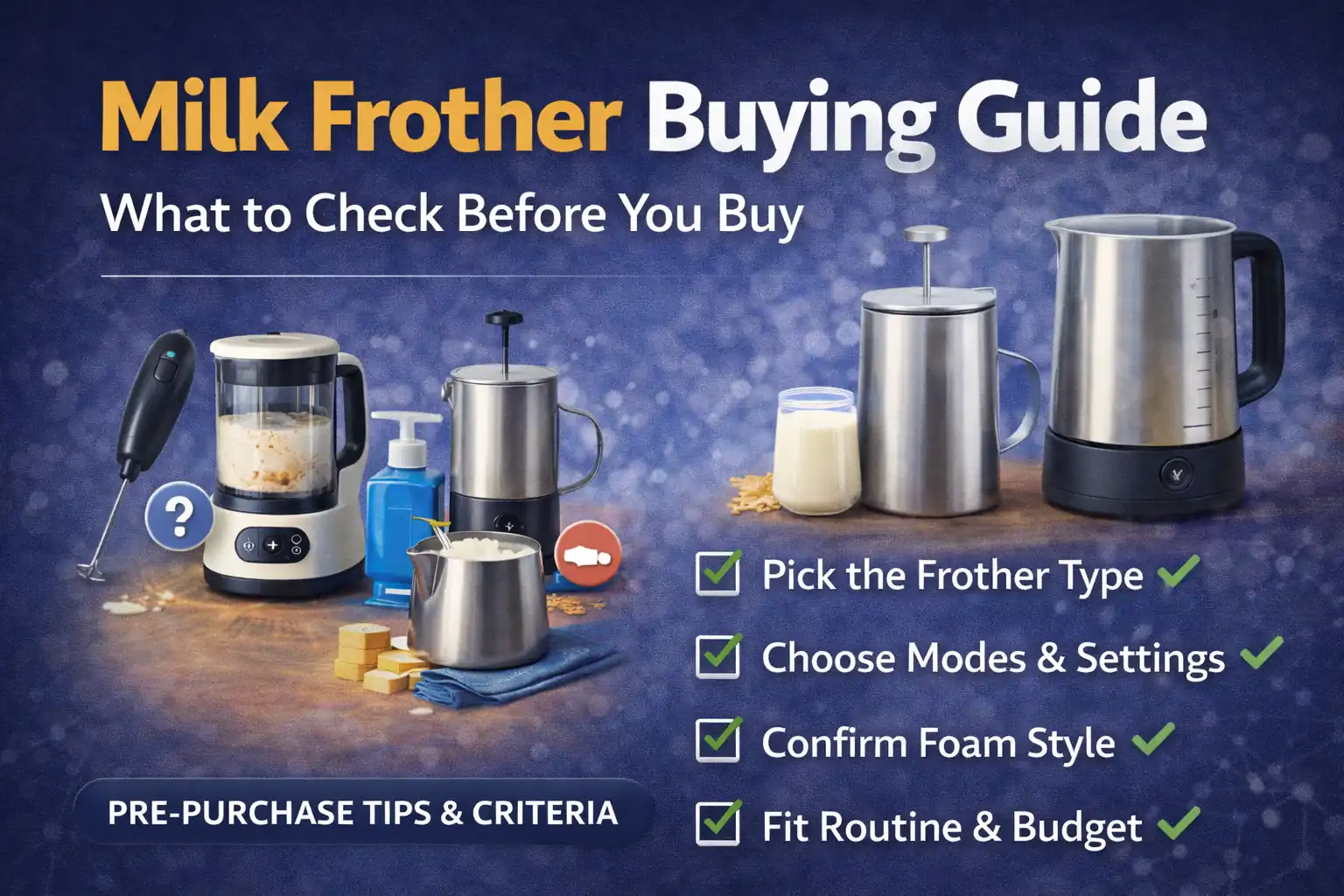
Before buying a milk frother, the most important thing to check is not just the price or the product image. It is whether the frother matches the drinks you make, the milk you use, the amount you serve, and the level of control you actually want at home. A good buying decision comes from matching the frother to your routine, not from chasing the longest feature list.
What Should You Check Before Buying a Milk Frother?
Before you buy a milk frother, check the frother type, the build quality, the available modes, the serving size it fits, the kind of foam you want, and the budget you are working with. These are the buying filters that matter most because they shape whether the frother will actually feel right once it is in daily use.
This is why a buying guide should start with decision logic instead of random product opinions. A frother that looks good on paper can still be the wrong choice if it does not match the drinks you make or the way you use milk at home.
Which Milk Frother Type Fits Your Needs Best?
Frother type is usually the first big decision because it controls the whole buying path. Some buyers need something simple and compact like a handheld milk frother. Others want more automatic behavior through an automatic milk frother, a more stable countertop route through an electric milk frother, or a simpler manual approach through a manual milk frother.
Do Materials and Build Quality Matter?
Yes, materials and build quality matter because they affect how the frother feels in use, how easy it is to maintain, and how confident the buyer feels about long-term value. A frother does not need to feel luxurious to be worth buying, but it should feel suitable for repeated use in the kind of routine the buyer actually has.
This is not about chasing premium materials for their own sake. It is about whether the frother feels dependable enough for the role it is supposed to play. Build quality becomes more important when the user plans to froth often, clean often, and rely on the device regularly.
What Modes and Settings Should You Look For?
The right modes depend on the drinks and foam styles you care about. Some users only need a straightforward frothing function. Others benefit from more flexibility, such as settings that support different foam outcomes or easier control over how the frother behaves in daily use.
This is where buyers often make a mistake by assuming more settings always mean a better purchase. Extra modes only matter if they support the drinks you actually make. A simple frother can still be the best choice if the user does not need more than one clear use case.
How Do Cup Size and Serving Size Change the Best Choice?
Cup size and serving size matter because they affect how much milk the frother needs to handle comfortably. A frother that suits one quick drink may not feel as useful if the buyer often makes larger servings or more than one drink at a time. Capacity is not just a technical detail. It changes the everyday practicality of the purchase.
This is why buyers should think in real serving patterns instead of abstract numbers. The best frother is not the one with the biggest capacity by default. It is the one that fits the amount of milk and the type of drink the user actually makes most often.
Which Frother Is Better for Lattes and Cappuccinos?
For latte-style drinks, buyers usually care more about smoother milk texture and a more integrated result. That is why the latte page becomes useful when the main buying filter is smoother foam. For cappuccino-style drinks, thicker foam expectations matter more, which makes the cappuccino page the stronger next route.
Drink style changes what the buyer should prioritize, even if the overall frother market looks similar at first glance. The buying guide defines the decision filter. The drink pages help the user go deeper into the right direction once they know which foam goal matters most.
Does Oat Milk or Plant-Milk Use Change What You Should Buy?
Yes, plant-milk use can change the buying decision because some frothers fit alternative milk routines more naturally than others. A buyer who mainly uses oat milk or other plant milks may care more about how the frother handles different textures and different foam expectations than a buyer who always uses the same dairy milk. This is where the oat milk page becomes the useful next step.
That does not mean the whole buying guide should become a plant-milk page. It means milk choice is one of the filters that can change what makes a frother feel like the right purchase.
How Should Budget Change Your Decision?
Budget should shape the path, not just the lowest price target. A low-cost frother may be the best choice for one buyer and the wrong choice for another depending on how often it will be used and how much convenience or flexibility the user expects. The best value is not always the cheapest option. It is the one that fits the routine without paying for features the buyer will never use. For a tighter value-focused route, see the budget page.
How to Choose the Right Milk Frother for Your Situation
The easiest way to choose is to start with your most important filter. Some readers should start with frother type. Others should start with drink goal, milk choice, or budget. The key is to narrow the decision in the right order instead of trying to judge every feature at once.
For example, a user focused on latte-style drinks may prioritize a different path from a user focused on oat milk or from someone trying to stay within a strict budget. The right frother is the one that matches the real use case, not the one that looks most impressive in isolation.
Final Recommendation
The best way to buy a milk frother is to begin with the criteria that actually change the outcome: type, foam goal, milk choice, serving size, modes, and budget.
